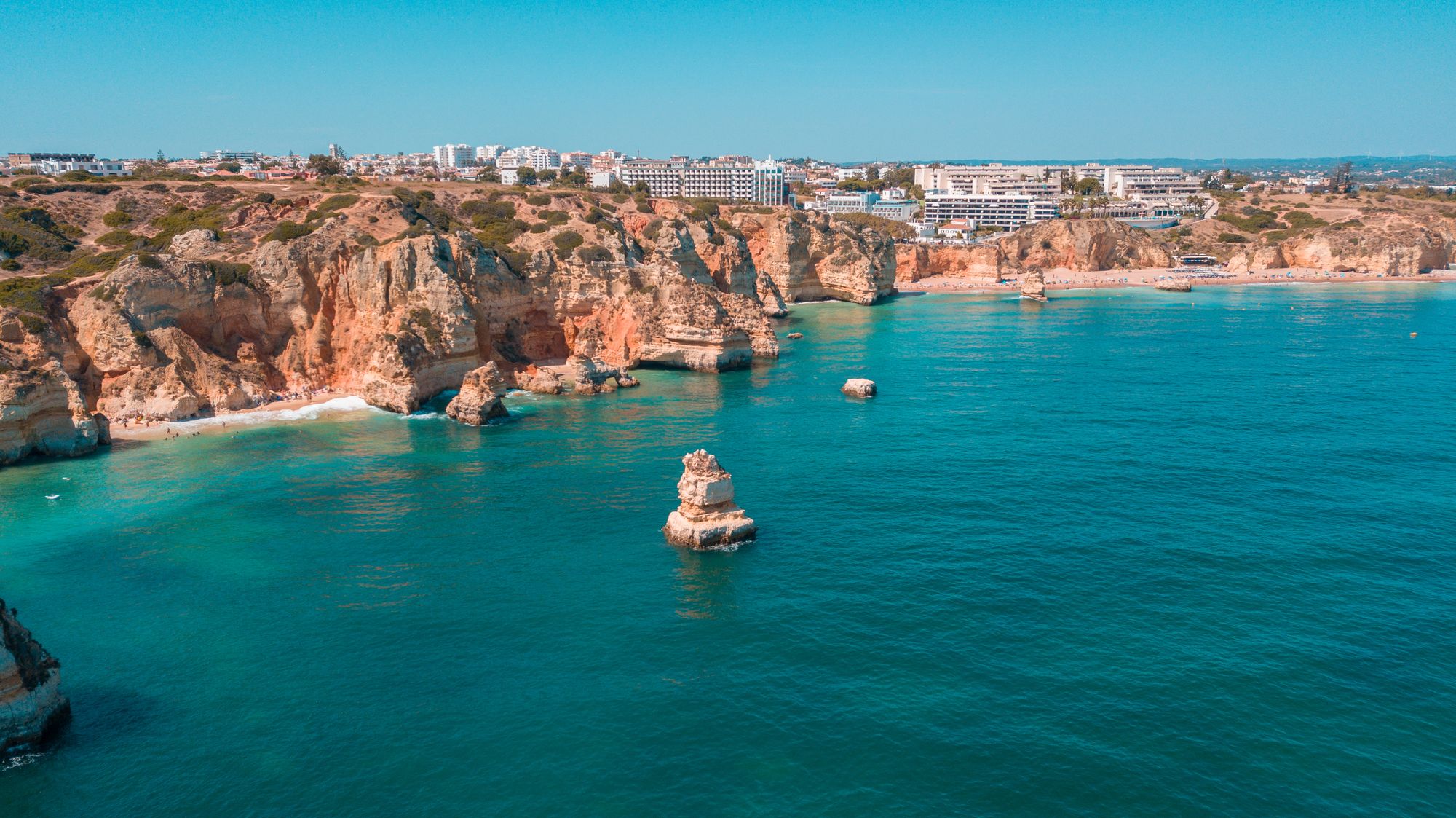
Imagine waking not to an alarm, but to the soft hush of the Atlantic rolling against golden cliffs. You step onto the terrace, espresso in hand, the air scented with wild rosemary and salt. Fishing boats bob in the distance like punctuation marks in a poem you have all day to read.
There is no frantic itinerary—only market mornings, long seafood lunches and evenings that end with local wine beneath an apricot-coloured sky. Here, time does not slip away. It expands. Life simplifies into what matters: connection, presence and the deep satisfaction of a day well savoured.
Why the Algarve belongs on your list
Portugal’s southern edge pairs dramatic limestone cliffs and sea caves with the protected lagoons of Ria Formosa, whitewashed towns and a food culture shaped by the Atlantic. Moorish influence, fishing traditions and small inland villages give the region far more depth than its resort reputation suggests.
Slow travel works beautifully here. Choose one or two bases—perhaps the tiled elegance of Tavira in the east, Lagos near the western cliffs or the compact charm of Carvoeiro—and let the days unfold. Couples find room to reconnect; solo travellers gain an approachable base; and curious travellers over 50 can stay active without making every day an endurance test.
When to go
Portugal’s tourism authority describes the Algarve as having roughly 300 sunny days a year. Even so, Atlantic weather can shift quickly, so pack a light waterproof layer outside summer and check local conditions before exposed cliff walks.
- May and June: Warm, bright days before peak-season crowds; excellent for coast walks and outdoor dining.
- September and October: Warm sea, softer light and a more relaxed atmosphere after summer.
- April and early November: Good value and mild walking weather, with a greater chance of cool or wet days.
- July and August: Hottest, busiest and usually most expensive—best for travellers who want lively beaches and dependable swimming weather.
- Winter: Mild by Canadian standards, but changeable. Expect quiet towns, cooler evenings and some rain rather than a traditional beach holiday.
A realistic travel budget
Prices move with the town, season, booking date and exchange rate. For planning, use euros first and convert to Canadian dollars when you are ready to book. A comfortable mid-range slow trip often falls around €140–€240 per person per day before flights, with couples sharing accommodation spending less per person.
- Accommodation: roughly €90–€160 nightly for a simple apartment or guesthouse; €160–€300 for many well-reviewed boutique stays; considerably more for premium cliffside resorts in peak season.
- Food: €4–€10 for a café breakfast, €12–€22 for a lunch special and roughly €25–€50 per person for dinner with wine.
- Transportation: commonly €30–€70 daily for a small rental car before fuel, insurance and seasonal price changes.
- Experiences: often €25–€60 for a cave or nature-park boat trip; cooking classes, private tours and golf can cost substantially more.
Could you stay longer—or retire here?
For a longer stay, housing will determine most of the budget. A couple renting in or near a popular coastal town might plan on roughly €2,500–€4,000 a month for rent, food, utilities, transportation and regular dining out, while recognizing that ocean-view housing and summer leases can push the total much higher.
Portugal offers residence routes for people with pensions or other stable income, commonly discussed as the D7 route. The official Portuguese visa portal ties the means-of-subsistence baseline to the national minimum monthly salary, listed as €920 for 2026. That figure is a baseline—not a promise of approval or a complete household budget. Applicants may need evidence of accommodation, insurance, recurring income, savings and additional support for dependants.
Residents may gain access to Portugal’s public health system depending on their status and registration, while many newcomers also carry private insurance. Before moving, obtain current advice from the Portuguese consulate or AIMA and independent Canadian cross-border tax and legal professionals. Residency rules, tax treatment and processing realities can change.
Eat with the tide
Eating in the Algarve is less about performance than communion—with the sea, the land and the people around the table. Grilled fish arrives with little more than lemon and olive oil. Cataplana de peixe or marisco steams fish and shellfish with tomatoes, peppers, garlic and herbs inside its distinctive hinged copper pan.
Look for conquilhas à algarvia, rice with razor clams, charcoal-grilled sardines in summer and Dom Rodrigos—delicate sweets made with egg yolk and almond. Visit Loulé or Olhão market early, then let lunch stretch. One unforgettable meal is worth more than three hurried reservations.
Seven ways to experience it slowly
- Choose a village square, order a coffee and stay long enough to watch the day change.
- Walk a manageable section of the Seven Hanging Valleys Trail rather than treating it as a race.
- Explore Ria Formosa by small boat, watching for birds and quiet island beaches.
- Browse a morning market in Loulé, Olhão or Faro and assemble a simple picnic.
- Visit Silves Castle, then remain in town for lunch instead of immediately driving away.
- Book a family-run wine, olive-oil or cooking experience and ask questions.
- Spend one full day without the car—reading, swimming, wandering and eating close to your base.
The moments that stay with you
These experiences are memorable because they sharpen your attention. They turn “luxury” from something you buy into something you notice.
- See the Benagil coastline from a licensed boat or kayak tour when sea conditions are safe; access rules can change, so verify before going.
- Watch the sun drop into the Atlantic at Cabo de São Vicente near Sagres.
- Take a small-boat trip through Ria Formosa and picnic on one of its barrier islands.
- Learn to cook cataplana with a local chef and bring the ritual—not only the recipe—home.
- Walk a clifftop path shortly after sunrise, keeping well back from unstable edges.
What a good day here feels like
Coffee on the terrace. Warm bread from the bakery. A short coastal walk before the sun climbs, followed by a long lunch. Perhaps the afternoon holds a shaded square, a lesser-known beach or absolutely nothing scheduled at all.
The mindset shifts from productivity to presence—from “what’s next?” to “what is enough right now?” That may be the Algarve’s most valuable souvenir.
The honest pros and cons
- The gifts: striking scenery, a mild climate, excellent seafood, varied towns and an easy rhythm for longer stays.
- The trade-off: July and August bring crowds, heat and higher prices in the best-known coastal towns.
- The freedom: a rental car opens the quieter beaches and inland villages.
- The responsibility: narrow roads, scarce parking and rental-car insurance deserve careful planning.
- The welcome: English is common in visitor areas, but learning basic Portuguese creates warmer, more respectful encounters.
- The reality: quiet winter months can mean reduced hours or seasonal closures in resort-oriented areas.
The B Side verdict
The Algarve is deeply worthwhile for travellers over 50 who want a European escape that nourishes rather than exhausts. It suits couples seeking romance without performance, solo travellers who value ease and people considering a longer seasonal stay.
It may not suit anyone who needs constant big-city energy—or who expects every day to feel like midsummer. But if your heart has been whispering for simpler, richer days, stay longer than feels efficient. The cliffs will still be there. The question is whether you will finally allow yourself to stand among them, unhurried, and truly arrive.