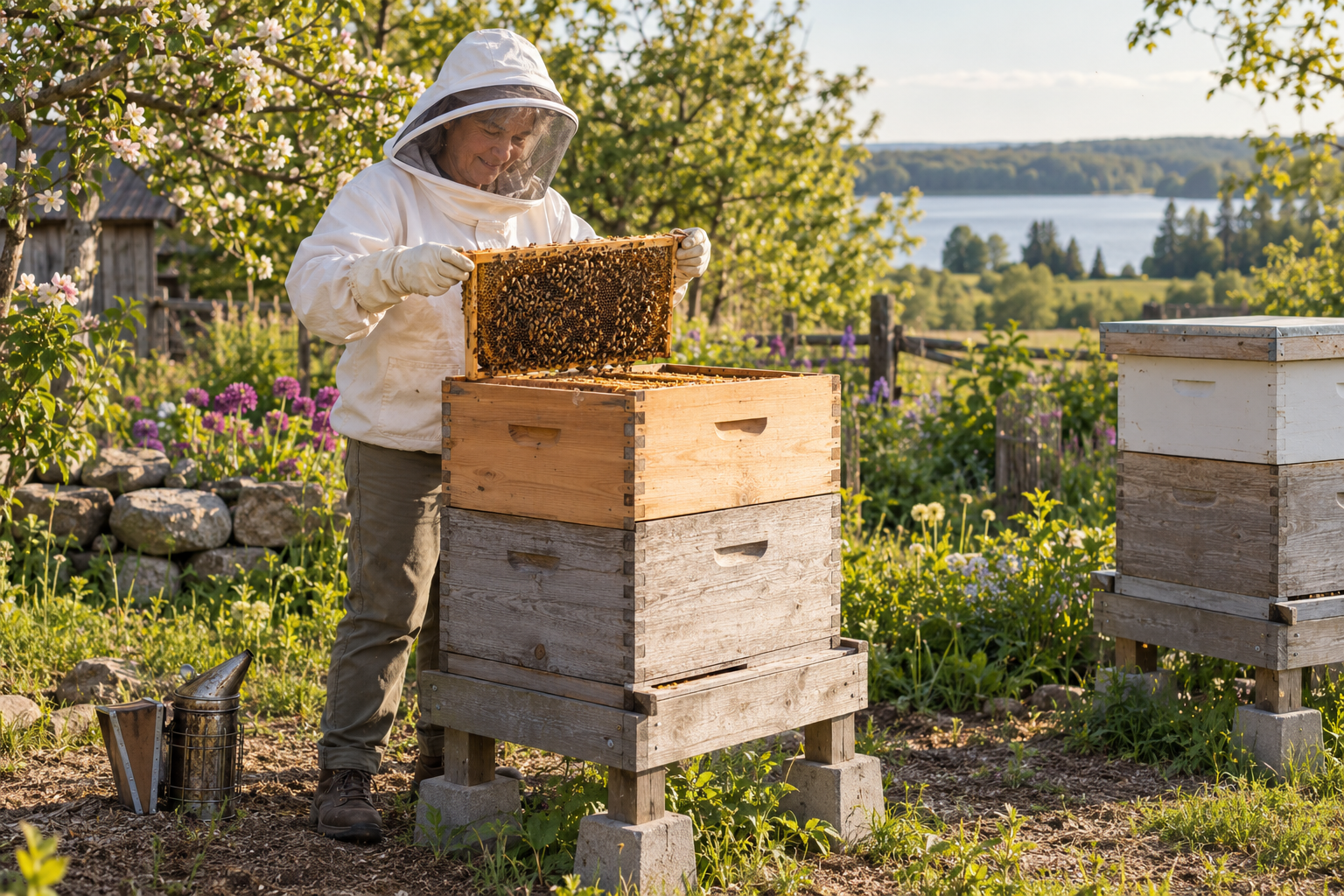
The first sound is not loud. It is a steady hum rising from a wooden box in the morning sun. You ease out a frame, hold it over the open hive and watch thousands of bees moving with purpose—nursing brood, storing food and keeping a small society alive.
Beekeeping can be peaceful, but it is never passive. It asks you to notice weather, flowering seasons, colony behaviour and tiny signs of trouble. In return, it offers gentle outdoor work, constant learning and the satisfaction of caring for something larger than yourself.
For someone approaching retirement, that combination can be deeply rewarding. A couple of backyard colonies can create a new rhythm for the year. With experience, the hobby can expand into honey and wax projects, club mentoring, citizen science, swarm calls or even travel built around the world’s beekeeping cultures.
Why it fits the second act
Beekeeping gives the week structure without filling every day. Spring and autumn are busy; winter is quieter and better suited to reading, repairing equipment and planning. The work changes with the season, so the hobby rarely feels repetitive.
It also has a clear purpose. Good beekeepers do more than own a box of bees: they monitor colony health, manage pests, prepare for winter and make decisions that can affect neighbouring apiaries. That responsibility is part of the appeal.
- Physical activity that can be adapted with lighter boxes, raised hive stands, carts and a second pair of hands.
- Mental challenge through observation, record keeping and problem-solving.
- A reason to spend regular, attentive time outdoors.
- Community through local associations, courses and shared extraction days.
- Tangible rewards including honey, beeswax and better awareness of the plants flowering around you.
The honest commitment
Beekeeping is closer to caring for livestock than placing a bird feeder. Colonies cannot be ignored for a month during swarm season, left untreated when mites rise or assumed to have enough food for an Ontario winter.
A small apiary does not demand daily attention, but it does require timely inspections and action. Vacation plans need a trusted beekeeper who can step in. Equipment takes storage space. Honey is heavy and sticky. Stings are part of the hobby.
If you mainly want to help pollinators without managing honey bees, a diverse pesticide-conscious garden, nesting habitat for native bees or volunteering with an established apiary may be a better—and still valuable—fit.
What it costs in Ontario
Current Ontario Beekeepers’ Association planning figures put a one-hive start at roughly $1,050–$1,900 CAD: about $700–$1,000 for basic hive equipment, $50–$250 for protective clothing, $100–$200 for tools and $250–$450 for a nucleus colony or established colony.
Processing equipment, jars, extra honey supers, feed, mite monitoring and treatments are additional. Two colonies are often helpful because you can compare them and sometimes use resources from a stronger hive to assist a weaker one, but they also increase the first-year cost and workload.
A sensible approach is to take the course first, then buy equipment once you understand the local system your mentor uses. Shared club extractors and used food-grade processing equipment can reduce later costs. Be cautious with used wooden hive equipment: disease organisms can persist, so obtain it only through legal, inspected channels.
- Beginner education and local association membership.
- One or two complete hives with room to expand.
- A properly fitted veil or suit, gloves and sturdy footwear.
- Smoker, hive tool, feeder, bee brush and record-keeping method.
- Local, inspected bees—often a nucleus colony for a new beekeeper.
- Mite-monitoring supplies, approved treatments and winter protection.
Ontario rules to check before buying bees
Anyone who owns or possesses honey bees in Ontario must register with the provincial Apiary Program. Registration is free. Provincial rules also cover apiary location, moving or selling bees and used equipment, inspections and reportable pests or diseases.
The Bees Act includes setback requirements in certain situations, including distances from occupied neighbouring land and highways. Municipal rules and property agreements may add practical constraints, so confirm the exact address before ordering bees. Speak with neighbours early, provide a reliable water source and plan the bees’ flight path away from patios, doors and play areas.
If you sell honey, Ontario’s food-safety, container, grading and labelling requirements may apply. Check your homeowner’s liability coverage as well; ordinary policies may not cover selling or giving products away.
Choose the site before the hive
A good bee yard makes management easier for both the keeper and the colony. Look for morning sun, protection from strong wind, firm and level footing, good drainage and year-round access. The location should have nearby forage and water without forcing bees into conflict with people.
Think about your future body, not only today’s enthusiasm. Raise the hive to a comfortable working height. Leave room to stand and set equipment down. Make the route from storage to the hives wide enough for a garden cart. Avoid a site that becomes icy, muddy or unreachable after heavy snow.
- Morning light and some shelter from prevailing wind.
- A stable stand with comfortable working space on all sides.
- A shallow water source with landing stones, maintained before bees arrive.
- A clear flight path away from neighbours and busy areas.
- Forage across the season—not only a spectacular two-week bloom.
- A realistic lifting and storage plan for boxes, frames and honey.
Your best first step is not buying a hive
- Join a local beekeepers’ association and attend at least one meeting before purchasing equipment.
- Take an Ontario-focused beginner course with hands-on time in an apiary.
- Find a mentor whose equipment and management approach you can understand and observe.
- Confirm provincial registration, siting rules, municipal requirements, insurance and household allergy considerations.
- Order healthy bees from a reputable Ontario supplier. A permit or inspection documentation must accompany regulated bee sales.
- Prepare the site, equipment, protective clothing and pest-management plan before pickup day.
Year one: learn the colony’s calendar
The first-year goal is not a shelf full of honey. It is learning to read the colony and helping it enter winter healthy, well provisioned and with manageable pest levels.
- Spring: Install or receive the colony, confirm that brood rearing is underway, feed only when appropriate and learn calm inspection technique.
- Early summer: Watch population growth, space needs and signs of swarm preparation. Keep records rather than trusting memory.
- Mid- to late summer: Monitor Varroa mites using a reliable method and follow Ontario guidance on thresholds and approved controls.
- Autumn: Reassess mites after treatment, verify food stores, reduce entrances when appropriate and prepare equipment for cold weather.
- Winter: Check external condition and entrances without repeatedly opening the hive. Review notes and prepare for the next season.
Varroa management is not optional
Varroa destructor mites and the viruses associated with them are among the central health threats to managed honey-bee colonies. Ontario guidance emphasizes monitoring and an integrated pest-management approach using appropriate cultural methods and registered treatments when needed.
A treatment-free label is not a beginner shortcut. Uncontrolled mites can kill the colony and contribute to pest pressure in neighbouring apiaries. Learn to measure mite levels, record results, choose controls suited to temperature and colony conditions, and confirm that a treatment is approved and used exactly as directed.
Years two and three: from reacting to anticipating
After one complete season, patterns begin to make sense. You recognize what healthy brood looks like, know when colonies usually expand and can prepare equipment before the bees run out of room.
This is the stage for improving swarm prevention, making carefully planned splits, refining mite control, processing honey and wax, and comparing records across colonies. Confidence grows when your decisions are based on observation rather than panic.
- Add colonies only when your time, storage and health-management habits are ready.
- Borrow or share an extractor before buying one.
- Learn queen assessment and replacement from an experienced mentor.
- Practise lifting with empty and partly filled boxes; use medium supers or assistance to limit strain.
- Volunteer at a club field day or beginner course to reinforce what you know.
Mastery has many directions
Beekeeping never really becomes predictable. Weather, forage, queens, pests and winter survival make every year different. That leaves many paths for experienced keepers: queen rearing, selective breeding, microscopy, honey judging, wax craft, teaching, research projects or a small sideline business.
The adventurous may join a supervised swarm-call network, attend provincial or international conferences or build travel around beekeeping traditions. Slovenia is especially notable for its painted hive panels, museums and organized bee-tourism experiences. Swarm collection itself should wait until you have training and support; unknown bees can carry pests and disease and should be isolated and assessed.
Safety for you and everyone nearby
Wear a veil for every open-hive inspection and use calm, deliberate movements. Keep the smoker in safe working order, use it carefully during dry conditions and fully extinguish it afterward. Avoid working alone until you are comfortable handling equipment and unexpected colony behaviour.
- Expect to be stung eventually; discuss any personal or family history of serious sting reactions with a qualified clinician before beginning.
- Know the signs of anaphylaxis and have a clear emergency plan. Breathing difficulty, throat or tongue swelling, widespread hives, dizziness or collapse require emergency action and a 9-1-1 call.
- Lift close to the body, reduce box size or frame count, and ask for help rather than proving a point with a heavy honey super.
- Keep visitors at a safe distance and provide properly fitted protective clothing when they enter the bee yard.
- Wash tools, manage equipment movement and follow biosecurity guidance to avoid spreading disease.
What to expect from the harvest
A nucleus colony may produce little or no surplus honey in its first season because it must build population, comb and winter stores. That is not failure.
The Ontario Beekeepers’ Association cites roughly 70–90 pounds as an average yield from a well-managed mature hive, but actual production varies enormously with weather, forage, colony strength and management. Treat honey sales as a possible offset—not the reason the budget works.
The first jar feels special because it contains more than honey. It holds a season of weather, mistakes corrected, skills learned and thousands of small decisions made at the right time.
The B Side verdict
Beekeeping suits curious people who like nature but also appreciate structure, responsibility and technical learning. It can be adapted as strength or mobility changes, especially when you begin with lighter equipment and accept help.
It is less suitable for anyone who wants a hobby that can be abandoned during busy months, is unable to accommodate stings or lifting, or cannot meet local siting rules. Take a course and spend time beside an open hive before committing.
Start small. Keep good records. Treat colony health as seriously as the harvest. If the steady hum still pulls you in, beekeeping may give retirement something rare: a reason to notice every change in the season—and a living community worth showing up for.