Somewhere in the house, there may be evidence of a life you meant to get back to.
A guitar case behind the winter coats. Fishing rods wedged into a corner of the garage. A camera with a dead battery and photographs still on the memory card.
You probably remember putting it away. You may even remember thinking, I’ll get back to that when things settle down.
Then things didn’t settle down. Or they did, briefly, and something else needed your attention.
Work, children, aging parents, a move, a few exhausting years. There wasn’t necessarily a decision to quit. You just stopped, and eventually stopping became the normal arrangement.
Now you have more time. Someone suggests pickleball. Someone else says you should learn Spanish or join a walking group. All reasonable ideas. But there’s another place to look for something you’d enjoy: your own past.
What did you love doing before your days became so crowded?
How did it get away from you?
It’s easy to assume an old interest ran its course. Sometimes it did. But sometimes the circumstances that made it possible disappeared.
You enjoyed camping until every weekend involved driving someone somewhere. You stopped singing when choir practice conflicted with work. Photography fell away because you could no longer spend two hours wandering around with no particular destination.
After enough years, you might say, “I used to be into that,” as though it belongs to a completely different person.
Try remembering why you stopped. Were you bored? Had you had enough? Or were you tired, busy and promising yourself you’d return?
The answer won’t tell you whether you’ll enjoy it now. It might give you a reason to find out.
A coffee mug is a perfectly good place to start
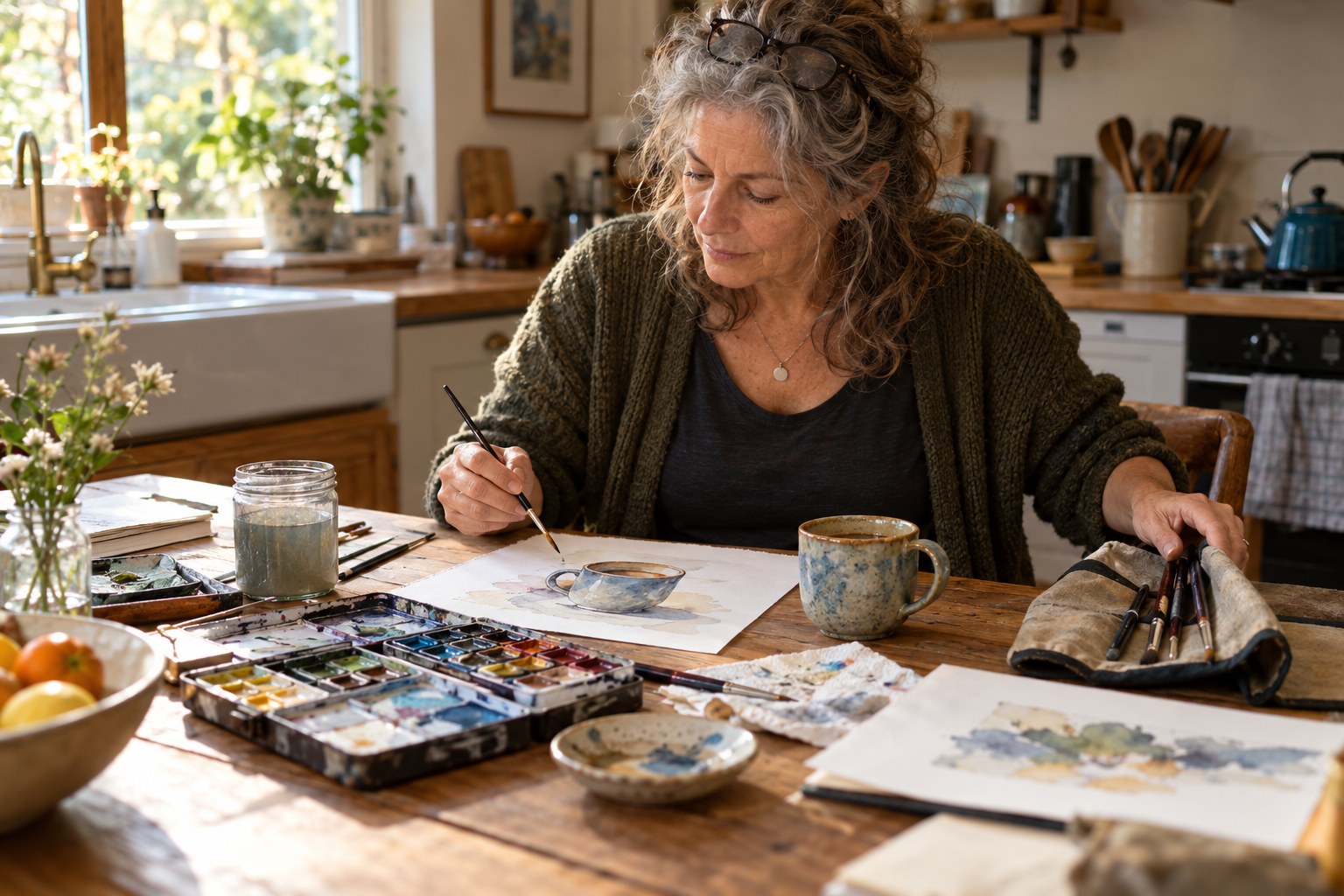
Imagine a woman finding her old watercolour supplies while clearing a basement shelf.
She painted in her thirties. Took a few classes, enjoyed it, never considered herself especially good. Then a new job and family life swallowed the afternoons she’d once spent painting.
Twenty-five years later, most of the paint tubes are dried out. Her first thought is to throw the box away.
Instead, she buys a small set of paints and some paper. On Sunday, she sits at the kitchen table and tries to paint the mug in front of her.
The handle comes out wrong. She fusses with a shadow and makes it worse. But she likes mixing the colours again. She remembers how the water spreads across the paper, and how much patience it takes to leave something alone.
By the time she looks up, the afternoon has gone.
That’s a modest comeback. No studio, no exhibition, no declaration that she has finally found her retirement purpose. Just an afternoon she’d like to have again.
Start with what you remember enjoying
Lists of retirement hobbies can be useful, although after a while they begin to resemble assignments. Learn this. Join that. Stay active. Be creative.
Your own history offers something more specific.
Think back to an ordinary good day when you were younger. What were you doing? Who were you with? What made you reluctant to stop?
Perhaps you spent hours working on a piece of furniture. Maybe you liked the chatter around a card table as much as the cards. You might remember cycling to nowhere in particular, cooking a complicated meal, or settling into a theatre seat as the lights went down.
Try to separate enjoyment from achievement. Being good at something isn’t the same as loving it. And being mediocre never stopped plenty of people from having a wonderful time.
You don’t need to recover a hidden talent. You’re looking for something you’d be glad to spend an afternoon doing.
Expect a bit of rust
The first attempt may be awkward.
You remember knowing the guitar chords, but your fingers apparently have other plans. Your tennis serve has become unreliable. You thread the sewing machine and discover you’ve forgotten one small, essential step.
It can be irritating, especially when you remember being competent.
Give yourself a little room. You’ve been away for years. Some things will return quickly; others will need practice. You may also find that what you want from the activity has changed.
Backcountry camping once meant freedom. These days, a good walk followed by a hot shower might sound better. You used to ride long distances; now you’d be happy cycling to a café. The band rehearsals you loved at thirty might be less appealing than playing a few songs at home.
Let yourself make those adjustments. The old version suited the life you had then. There’s no reason to preserve every part of it.
You may remember more than you expect
Occasionally, an old skill comes back before you’ve had time to doubt it.
Your hands find a chord. You pick up a knife and remember how you used to prepare a favourite dish. You cast a fishing line and, after a few poor attempts, feel the timing return.
Other memories arrive with it: the friend who taught you, the room where you practised, the place you used to go on Saturday mornings.
That can be a pleasure in itself. It may also remind you of how much experience you’re carrying around, including things you haven’t had any reason to use lately.
Still, there’s no requirement to turn a pleasant moment into a regular commitment. You can enjoy remembering how to do something and leave it there.
A good memory doesn’t always need a sequel
You might take one look at your old ski boots and feel grateful you no longer have to wear them.
Fair enough.
Perhaps restoring cars was enjoyable once, but now the thought of spending Saturday beneath an engine holds no appeal. Or you discover that the activity mattered mostly because of the people you did it with.
That’s worth knowing. Maybe you’re missing the company more than the hobby.
Try to judge the experience you’re having now, rather than the one you remember. Nostalgia can get you through the door, but it won’t necessarily keep you interested.
If you give something another try and don’t enjoy it, you can stop. The years you spent loving it don’t become less valuable.
Keep the first attempt small
An old enthusiasm can make a shopping trip feel justified very quickly.
You once enjoyed photography, so surely a new camera would help. You’re thinking about cycling again, and suddenly you’re comparing bikes that cost more than your first car.
Wait until you’ve had a few outings.
Use what you have, if it’s suitable and safe. Borrow, rent or buy something inexpensive. Take one class before signing up for a whole season.
A sketchbook and a pencil will tell you something. So will an hour at the driving range, a visit to the local pool or one afternoon cooking a recipe you haven’t made in years.
Choose a first attempt that’s easy enough to happen. You can make bigger plans once you know you want to go back.
Give one thing a try this week
Take a few minutes and write down five things you used to enjoy doing.
Go back through different periods of your life. Include the small pleasures, too. Listening to an entire album. Visiting second-hand bookshops. Growing tomatoes. Going out for live music.
Circle whichever one makes you curious.
Then arrange a small return: charge the camera, check the pool schedule, find the recipe, call the friend you used to fish with.
If the bicycle has been hanging in the garage for ten years, getting it checked over may be the sensible first step. You don’t have to ride it today.
Just give the idea somewhere to go.
Retirement brings enough changes without requiring you to replace everything you once enjoyed. You may discover plenty of new interests. You may also find that something familiar still suits you, with a few adjustments.
Get the guitar out. See whether the paints are usable. Put on the album you nearly wore out.
You’ll know more after an afternoon with it than you will after another month of wondering.