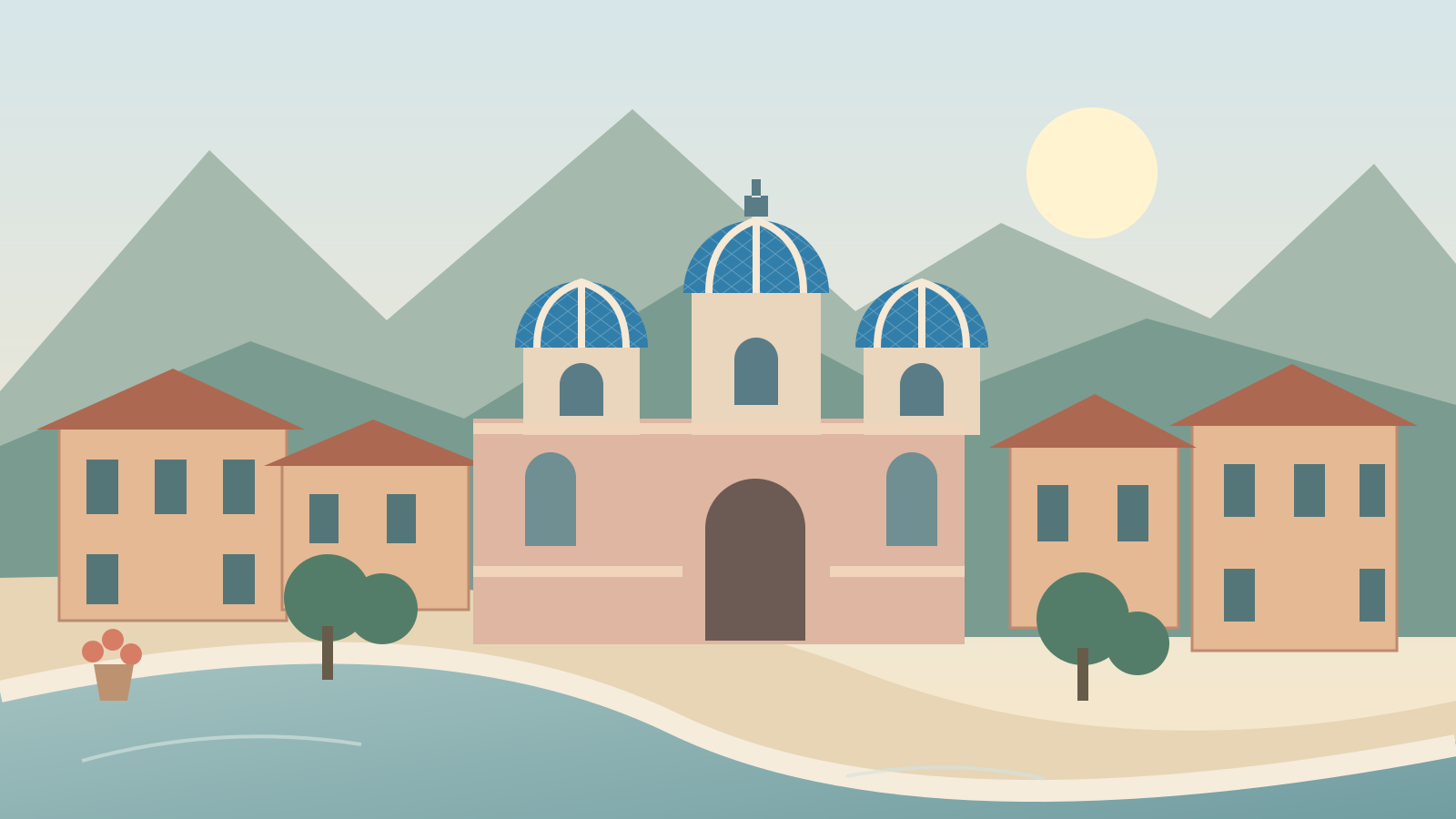
At a little after eight, the flower sellers are already busy.
Outside the Church of El Carmen de la Asunción, buckets of roses, lilies and carnations spill colour across the square. A woman assembles an enormous bouquet while talking to three customers, apparently without losing track of anyone’s order.
Across the street, a bakery opens its doors. You follow the smell.
Inside, trays of warm bread sit behind the counter: cheese-filled rolls, sweet pastries and a few things you haven’t learned the names of yet. You point to something promising. The young man tells you what it’s called, waits while you attempt the pronunciation and smiles kindly at the result.
Soon you’re sitting with coffee and breakfast. Above the rooftops, the blue-and-white domes of Cuenca’s New Cathedral catch the morning light. The air is cool, but you can already feel the strength of the sun.
You’ve been here four days. Yesterday you explored the old town. Tomorrow you might visit a weaving workshop outside the city.
Today, you have nothing planned until lunch.
You’re beginning to appreciate that.
Cuenca suits travellers who enjoy staying long enough to find their own rhythm. There are churches, museums and mountain excursions to fill a busy itinerary, but the city becomes more interesting when you stop treating every day as a sightseeing assignment.
Walk beside the river. Buy fruit at the market. Find a café you like and go back. Have a good lunch without wondering what it will do to the holiday budget.
For anyone approaching retirement, that combination raises a worthwhile question:
Could spending a month somewhere beautiful become an ordinary part of life, rather than an expensive exception?
Cuenca is a good place to explore the answer.
Why Cuenca Rewards a Longer Stay
Cuenca sits in southern Ecuador, roughly 2,500 metres above sea level. Its elevation shapes almost everything about a visit, from the cool evenings to the mountain views—and the need to take things gently when you arrive.
Although Ecuador straddles the equator, this is a city where you’ll use a sweater. Days are generally mild, nights can be chilly, and the surrounding Andes give the place a distinctly mountain character.
The historic centre is its most obvious attraction. Churches, plazas, traditional houses and handsome streets reflect a history that includes Cañari communities, Inca settlement and Spanish colonial development. UNESCO recognized the historic centre as a World Heritage Site in 1999.
Yet some of Cuenca’s most appealing corners would never make a sightseeing checklist: a small bakery, a workshop with its doors open, a courtyard glimpsed from the pavement, houses overlooking the Tomebamba River.
There’s pleasure in discovering those places gradually.
Cuenca is also a working city with a life well beyond tourism. People shop, commute, meet friends and take their children to school. Markets serve local households. River paths provide somewhere to exercise after work.
Stay a few weeks and you begin to fit your days around that everyday activity. You learn when the neighbourhood wakes up, where to buy bread and which restaurant fills with regulars at lunchtime.
That familiarity is a large part of the appeal.
When to Go: Think Layers, Not Beachwear
Cuenca offers a welcome break from a Canadian winter, provided your idea of relief is a comfortable afternoon walk rather than a swim in warm seawater.
Daytime temperatures commonly sit around 17–22°C, with evenings sometimes falling below 10°C. You might leave home in a sweater, carry it by lunchtime and put it back on after dinner.
Rain is possible throughout the year. Mountain weather also has a way of making broad seasonal descriptions look overly confident.
June to September: A Good Starting Point
These months are generally drier and suit visitors hoping to walk, photograph the city and explore the surrounding countryside.
August or September would be a sensible choice for a first visit. You have a reasonable chance of favourable conditions for outdoor plans, though you should still carry rain protection and expect cool mornings.
October and November: Green Scenery and Local Celebrations
Rain becomes more likely, but there’s still plenty to enjoy between showers. The countryside is green, and Cuenca’s early-November independence celebrations can add cultural events and a livelier atmosphere.
If you visit around the festivities, check accommodation availability and ask about noise near your intended apartment.
December to May: A Useful Test of Winter Living
This period is generally wetter, with some days starting pleasantly before afternoon clouds and rain develop.
For Canadians considering Cuenca as a seasonal base, January through March offers a useful trial. You’ll experience the weather you’d actually be returning for, rather than making a winter-living decision after a visit in the drier season.
An afternoon around 18°C can feel wonderful after an Ontario snowstorm. A damp apartment on a cool evening may be less appealing.
Both belong in the assessment.
Pack comfortable walking shoes, light layers, a rain jacket and sun protection. You’ll use them all.
What Does a Visit Cost?
Ecuador uses the U.S. dollar, so the prices below are in US dollars unless marked otherwise. Canadian travellers still need to account for the exchange rate and any card or conversion fees.
Cuenca’s value is most apparent in everyday spending. Local lunches, produce, public transportation and ordinary café visits can cost much less than their Canadian equivalents.
Accommodation requires more care. A local resident’s annual lease tells you relatively little about what a visitor will pay for a furnished apartment with flexible dates.
Treat the following figures as planning allowances, then compare actual options for your trip.
| Expense | Planning range |
|---|---|
| Comfortable hotel | US$45–$80 a night |
| Boutique hotel | US$80–$130 a night |
| Upscale boutique hotel | US$130–$220+ a night |
| Traditional breakfast | US$3–$6 |
| Local set lunch | US$3–$5 |
| Restaurant dinner | US$12–$25 per person |
| Specialty coffee | US$2–$4 |
| Short taxi journey | US$2–$5 |
| Furnished apartment for a month | US$650–$1,100 |
Location, season, rental fees and your expectations will influence the final bill. A quiet apartment with a good mattress may be worth paying more for than a photogenic bargain above a busy street.
Getting There From Canada
Cuenca’s Mariscal Lamar Airport has domestic connections to larger Ecuadorian cities. A common approach from Canada is to fly to Quito and continue to Cuenca.
For an initial budget, allow roughly C$1,100–C$1,700 per person return for the complete journey, then check flights for your dates. Connection times, baggage and fare conditions can change the total substantially.
It takes more effort than flying to a familiar resort destination. Over a month, that extra connection becomes easier to justify—and once you arrive, you can enjoy much of Cuenca without a car.
Eat Well, Starting With Lunch
Cuenca’s traditional food makes sense in its mountain setting. Potatoes, corn, beans, pork, fresh cheese and warming soups appear frequently, alongside a growing choice of contemporary and international restaurants.
You can have an elaborate dinner when you feel like one. You can also eat very well somewhere modest.
Locro de Papa
This comforting Ecuadorian potato soup often includes onions, cheese and seasonings, with avocado added at the table.
It’s a particularly good choice on a cool afternoon—and a likely candidate for your recipe collection when you get home.
Mote Pillo
One of Cuenca’s signature dishes, mote pillo combines cooked hominy corn with eggs, onions, achiote and seasonings.
The corn has a pleasantly chewy texture. Paired with eggs and onions, it makes a satisfying breakfast or accompaniment to a larger meal.
Hornado
Slow-roasted pork is a familiar sight in markets and traditional restaurants, usually served with corn, potatoes and other accompaniments.
A busy stall with a steady flow of local customers is an inviting place to begin your search.
Llapingachos
Golden potato patties, often filled with cheese, are served with various accompaniments, including eggs or meat.
If potato cakes already have a place in your affections, these are unlikely to disappoint.
Cuy
Roasted guinea pig has a long history in Andean food traditions and is associated with celebrations and special occasions.
Some visitors are curious to try it; others prefer to learn about the tradition and order something else. Either approach is perfectly reasonable.
Morocho
Made with corn, milk and spices, morocho is a sweet, warming drink or porridge. Cinnamon often features, making it especially appealing on a chilly morning.
The Lunch You’ll Keep Going Back For
The almuerzo, a local set lunch, may become one of your favourite Cuenca habits.
Many restaurants serve soup, a main course and a drink for around US$3–$5. The food is generally straightforward and substantial—the kind of meal that sustains a working day.
During a longer stay, you have time to find the places you like best. Perhaps one makes excellent soup. Another serves particularly good chicken. Eventually you know where you’re heading before noon arrives.
That’s a useful discovery when eating out regularly is part of the pleasure of travelling.
Seven Experiences to Enjoy at Your Own Pace
1. Get to Know the Historic Centre a Few Streets at a Time
Begin at Parque Calderón, with the New Cathedral rising beside the square. Then choose a direction and wander.
Some days you’ll visit a museum or church. Other days you’ll notice a courtyard, browse a small shop or find a café worth returning to.
Leave yourself reasons to come back. The historic centre is far more enjoyable when you’re free to follow your curiosity than when you’re trying to finish it before lunch.
2. Make the Tomebamba River Part of Your Routine
The Tomebamba runs along the edge of the historic centre, with old buildings overlooking the water and paths used by residents for walking and exercise.
For an active visitor, this is a considerable advantage. A pleasant walk can begin outside your door, without a drive or an organized excursion.
Follow the river, stop for coffee and return through a different neighbourhood. After a week or two, you may have a favourite stretch.
3. Buy Flowers for Your Apartment
The flower market near El Carmen de la Asunción is worth visiting early, while vendors arrange their displays.
The colours are wonderful, but there’s something especially enjoyable about buying a bouquet because you have somewhere to put it.
Bring it home, find a vase and let it sit on the kitchen table. A small purchase can make a temporary apartment feel much more welcoming.
4. Take an Easy First Look at Cajas National Park
West of Cuenca, Cajas offers a dramatic change of scenery: high grasslands, mountain lakes, wetlands and clouds moving across open slopes.
It also brings a substantial increase in altitude. Some popular areas sit around 3,900 metres, considerably higher than the city.
Give yourself time to adjust in Cuenca before heading up. Choose a manageable route, check conditions and consider a knowledgeable guide. Warm layers and waterproof clothing deserve space in your day bag.
You can appreciate the landscape without committing to a demanding hike.
5. Visit Gualaceo and Nearby Weaving Workshops
Gualaceo and surrounding communities offer traditional markets, regional food and a chance to learn about ikat weaving.
In this technique, patterns are created by dyeing the threads before they’re woven. Watching the work gives you a much better appreciation of the finished textile.
Allow time for questions, a market lunch and a wander through town. If you decide to buy, purchasing directly from the maker can make the piece more meaningful.
6. Learn Where Panama Hats Come From
Despite the name, traditional Panama hats come from Ecuador. Woven from toquilla fibres, they became associated internationally with Panama through trade and their use there.
Cuenca has an important place in the hat industry, and workshops and museums offer an introduction to the craft.
Look closely at the weaving, compare the different grades and try a few on. You may leave with a better understanding of the skill involved—and a hat you’ll wear for years.
7. Give Ingapirca a Full Day
North of Cuenca, Ingapirca offers an introduction to Cañari and Inca history. Its elliptical Temple of the Sun and carefully fitted stonework are especially striking against the surrounding Andean landscape.
A guided visit helps you understand what you’re looking at. Check current access and reservation arrangements before setting out.
The site is also higher than Cuenca, at roughly 3,160 metres. Keep the day comfortable and allow time to enjoy it.
The Moments You’re Likely to Remember
Cuenca’s memorable experiences needn’t come with a large bill.
You might remember the cathedral domes in late-afternoon light, a lake disappearing into cloud in Cajas, or the concentration of an artisan working at a loom.
You may remember Ingapirca’s stonework. You may also remember the woman at the market who began recognizing you, or a long lunch with people who live in the city.
A longer stay gives both kinds of memory room to develop.
What an Ordinary Wednesday Could Look Like
By your third week, the days have acquired a comfortable shape.
You wake around seven, make coffee and reach for a sweater before walking to the market. You need eggs, tomatoes, bread and fruit. The vegetable seller recognizes you, and your Spanish now stretches far enough to manage the purchase without pointing at every item.
Later, you sit outside a café as the sun warms the street.
Lunch is at a small restaurant you’ve visited twice already. Soup comes first, followed by chicken, rice, vegetables and a drink. Afterwards, you walk home beside the river.
There’s time to read, rest or do very little.
Toward evening, you visit a gallery, then meet another couple for dinner. They’ve lived in Cuenca for two years, and you ask what daily life is really like.
They talk about the walking, the food and how far their money goes. They also mention paperwork, service interruptions and the occasions when limited Spanish made something unnecessarily difficult.
You listen closely. Their experience helps you picture the city beyond your holiday.
Back at the apartment, tomorrow remains undecided. You might visit a nearby village. You might take another riverside walk.
You have enough time to choose in the morning.
Could Cuenca Work as a Retirement Base?
The attraction is understandable: mild weather, a walkable historic centre, affordable everyday expenses and enough cultural life to keep a longer stay interesting.
But a pleasant month and a permanent move require very different decisions.
A couple with a conventional residential lease might use US$1,800–$2,500 a month as an initial living-cost estimate. Housing choices, healthcare and spending habits can move that figure considerably.
For Canadians, the full calculation also needs to include trips home, insurance, immigration expenses, exchange rates and any costs retained in Canada.
Then there are the personal questions. How often would you want to see family? Would you enjoy building friendships in Spanish? How would you feel during a difficult week, when the novelty had worn off and something needed fixing?
A seasonal stay is a useful way to investigate those questions before making a larger commitment.
Entry and Residency
Tourist admission and longer-term residence are separate matters. Check current entry rules for Canadian passport holders, permitted lengths of stay and any extension procedures before booking.
Ecuador has residence categories for qualifying retirees and other applicants, but income thresholds and documentation requirements can change. Verify them through official Ecuadorian channels or a consulate before relying on a published figure.
Canadian tax residency, provincial healthcare eligibility and pension arrangements also need individual attention if you’re considering extended absences or relocation.
The first month can be about getting to know Cuenca. A move deserves its own planning process.
The Advantages—and the Things to Look at Closely
Cuenca brings together several qualities that are particularly useful for a longer visit:
- Everyday affordability: Markets, local restaurants and transportation can keep routine spending modest.
- A beautiful setting: Historic streets and riverside paths make ordinary outings enjoyable.
- Plenty to explore: Museums, workshops, regional food and nearby towns offer variety.
- Access to nature: The surrounding Andes provide rewarding excursions.
- Life without a car: Many daily needs can be met on foot or with local transportation.
A few practical considerations deserve equal attention.
Safety
Ecuador’s security situation needs careful review before travel. Conditions differ across the country, and a reassuring description of Cuenca should never substitute for current advice about the city, your arrival route and any planned excursions.
Check the Government of Canada’s Ecuador travel advisory before booking and again before departure. Use reputable transportation, keep valuables discreet and ask reliable local contacts about areas or routes to avoid.
Altitude
At roughly 2,500 metres, Cuenca can leave some visitors tired, breathless or headachy while they adjust.
Keep your first days easy and postpone strenuous mountain outings. If you have health concerns that could affect high-altitude travel, discuss the trip with a healthcare professional beforehand.
Spanish
Basic tourism is manageable with limited Spanish. Renting, arranging medical care and resolving practical problems become easier as your language skills improve.
A few lessons during your stay could make the month both smoother and more rewarding.
Service Interruptions
Ask about electricity, water and internet reliability at the actual property you’re considering. If dependable connectivity matters, find out what backup arrangements are available.
Cool Interiors
Cuenca’s mild climate doesn’t guarantee a warm apartment. Buildings without heating can feel chilly during damp weather, particularly if they receive little sunlight.
Ask about indoor comfort as carefully as you ask about the view.
Could I Actually Stay Here for a Month?
Yes—provided the climate, altitude and current security conditions suit you. The most useful next step is to price a real apartment and picture your ordinary week around it.
Choose the Neighbourhood Before the Décor
For a first stay, investigate the historic centre, El Vergel, El Ejido and areas near the Tomebamba River.
Compare walking distances to groceries, cafés and transport. Ask about traffic, nightlife, stairs and the route home after dinner.
A beautiful colonial apartment may come with steep steps, cold rooms or more street noise than its photographs suggest.
Furnished Apartment: US$650–$1,100
For approximately 30 days, this is a reasonable starting allowance rather than a promise of availability.
Prioritize:
- A quiet bedroom and comfortable mattress.
- Good daylight and reliable hot water.
- A useful kitchen and washing machine.
- Internet verified at the apartment.
- Convenient access to everyday shopping.
Confirm the total price, including cleaning, utilities and booking fees.
Groceries: US$250–$400 for Two
Local produce, eggs, bread, cheese, beans and potatoes can offer excellent value. Imported brands may cost much more.
Shopping around what’s available locally makes both financial and culinary sense. You may also find that inexpensive lunches reduce how often you want to cook.
Restaurants and Cafés: US$250–$450 for Two
This allowance can cover local lunches, coffee stops and some nicer dinners. Frequent wine, upscale restaurants and daily meals out will require more.
Let your budget reflect how you actually enjoy travelling.
Local Transportation: US$50–$100 for Two
Walking, buses, the tram and occasional taxis can cover much of everyday life. Check current fares and card arrangements when you arrive.
Budget countryside tours or private drivers separately. A rental car is unlikely to be necessary for a first month in the city.
Healthcare
Cuenca has hospitals, clinics and medical services, but access, language and payment arrangements require investigation.
Arrange suitable travel medical insurance. If you have ongoing health needs, check prescription availability and relevant care before departure.
Internet and Daily Essentials
Established neighbourhoods offer broadband options, but the connection in your apartment matters more than a citywide claim about speed. Request a recent speed test and consider mobile data as backup.
Supermarkets, pharmacies, markets and banks make daily life practical. Small bills and coins are useful for local purchases, and some patience helps when things take longer than expected.
Two Annoyances Worth Asking About
A cold apartment: Ask how the property feels in the evening, whether it gets direct sun and what heating is available.
Complicated arrangements: Clarify how repairs, utility problems and questions will be handled. For a short stay, a responsive host can save considerable frustration.
A Comfortable Month for Two
| Expense | Monthly planning allowance |
|---|---|
| Furnished apartment | US$650–$1,100 |
| Groceries | US$250–$400 |
| Restaurants and cafés | US$250–$450 |
| Local transportation | US$50–$100 |
| Activities and excursions | US$200–$400 |
| Utilities, phone and miscellaneous | US$100–$200 |
| Total | US$1,500–$2,650 |
International flights and travel medical insurance are extra. Confirm which utilities are included in the rent so you don’t count them twice.
A working target of US$2,000–$2,200 for two gives you a useful figure to test against real bookings. It allows room for everyday comfort and outings, though your apartment choice will have a large influence.
Keep a contingency beyond the planned total. Travel is more enjoyable when an unexpected expense doesn’t undo the month’s budget.
Is Cuenca Worth Your Time?
If you enjoy historic cities, markets, regional food and walking, Cuenca offers plenty of reasons to stay.
Its appeal becomes clearest in the daily routine: a good breakfast, a walk beside the river, fresh produce, an affordable lunch and something interesting to see in the afternoon.
The altitude may take adjustment. The evenings may be cooler than you’d like. Current security conditions may affect your plans. Those are meaningful considerations, and a trial stay can help you judge whether the city suits you.
After a few days, you’ll have seen the cathedral. After a few weeks, you may know where to buy your favourite bread and which streets you prefer walking home.
You might decide to return every year. You might decide you’d rather spend winter somewhere warmer.
Either way, you’ll have learned something useful about how you want to travel—and perhaps how you want to spend more of your retirement.
If Cuenca Appeals to You, Consider These Too
Arequipa, Peru
For colonial architecture, regional food and dramatic volcanic scenery. It’s an appealing option for travellers drawn to history and Andean landscapes.
Sucre, Bolivia
For whitewashed buildings, historic streets and a slower pace. It lends itself to settling in and exploring gradually.
Loja, Ecuador
For a smaller city with musical traditions and access to mountain scenery. It may interest visitors looking for a less internationally oriented setting.
Cuenca at a Glance
| Planning question | Starting point |
|---|---|
| Best months for a first visit | August or September |
| When to test Canadian winter living | January through March |
| Ideal stay | Three to four weeks |
| Monthly target for two | US$2,000–$2,200, plus flights and insurance |
| Car needed? | Usually no for city life |
| Areas to investigate | Historic centre, El Vergel, El Ejido and near the Tomebamba |
| Main appeal | Culture, walkability and everyday value |
| Main considerations | Security, altitude, cool interiors and service reliability |
| Retirement approach | Try a seasonal stay before considering relocation |
A Question Worth Taking Home
Imagine renting an apartment for a month. You shop at the market, learn a little Spanish, walk beside the river and take occasional trips into the mountains.
Some days are busy. Others consist of lunch, a book and an evening stroll.
Would that life suit you?
You don’t have to make a permanent decision to find out. You can spend a month in Cuenca, talk to people who live there and notice how you feel once the first excitement settles.
By the time you return home, you’ll know more than what the cathedral looks like. You’ll have a clearer sense of what makes a day enjoyable for you—and how much it needs to cost.
That’s a worthwhile thing to bring back from a trip.