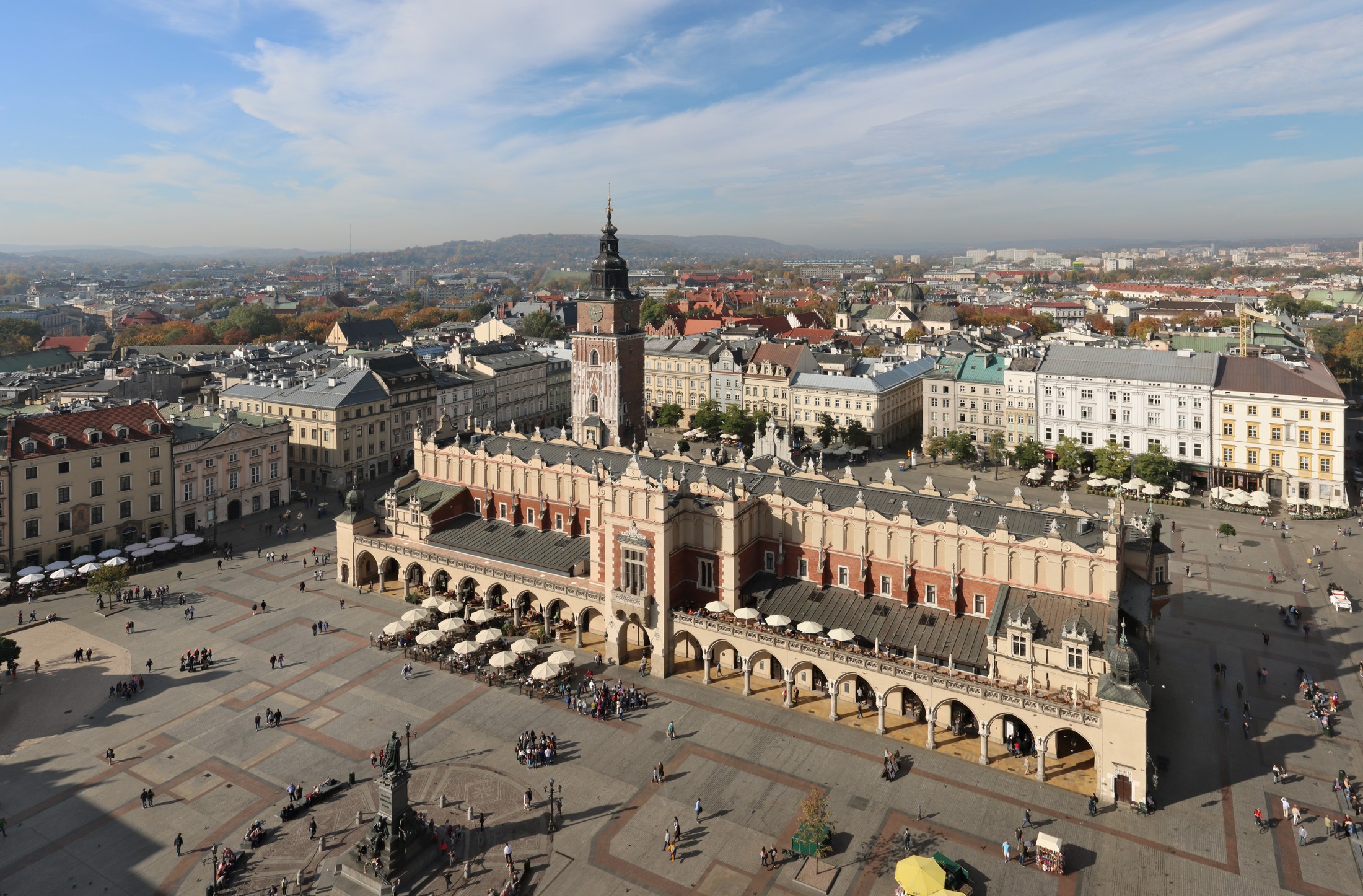
A trumpet, a coffee and nowhere you need to rush
At nine on a September morning, a trumpet sounds above Kraków’s Main Market Square. The melody comes from the tower of St. Mary’s Basilica, carries across the rooftops and stops abruptly, as though someone has interrupted the musician halfway through a thought.
That unfinished tune is the Hejnał Mariacki. Local legend connects it to a watchman warning the city of an approaching attack. You can read the history later. For now, your coffee has arrived, the pastry is still warm and the flower seller across the square is setting out her morning stock.
You’ve been here nearly two weeks. You’ve visited Wawel Castle, wandered through Kazimierz and found a bakery worth crossing the neighbourhood for. Yesterday, you bought groceries, walked beside the river and spent an hour reading in a café. It was one of your favourite days so far.
Kraków makes room for that sort of travel. There’s plenty to see, but there’s also considerable pleasure in having nothing booked until tomorrow.
Give it a month and the famous landmarks begin sharing space with smaller discoveries: a market stall with particularly good cheese, a quiet courtyard, the tram that gets you home. Those are the details you may find yourself thinking about long after you leave.
Why give Kraków a whole month?
Kraków has the sort of history that could keep a guide talking all afternoon. It was Poland’s royal capital for centuries, a trading centre and a seat of scholarship. Its medieval street plan, churches, university buildings and royal architecture helped earn its historic centre a place among the first sites added to the UNESCO World Heritage List in 1978.
Much of that history is visible without buying a ticket. Walk through the Old Town and you pass elegant townhouses, church towers, stone gateways and courtyards you could easily miss on a hurried visit.
Yet Kraków is also a working university city. Students fill the cafés, trams carry people to work, and contemporary galleries and restaurants give you reasons to look beyond the postcard views. You can spend a morning absorbed in medieval architecture and an evening eating thoroughly modern Polish food.
For an extended stay, the practical side matters just as much. The centre is manageable on foot, public transport helps with longer distances, and you can reach several worthwhile excursions without hiring a car. Everyday spending can compare favourably with many Western European destinations, particularly once you start shopping and eating beyond the main tourist streets.
A weekend gives you the highlights. A month lets you go back to the places you liked, finish the museum you underestimated and discover what’s happening a few tram stops farther out.
When I’d go
For a first visit, I’d choose September. The busiest summer holiday period is easing, the markets are beginning to show their autumn produce, and the weather often suits long walks followed by a warm lunch. Pack layers and a waterproof jacket; pleasant afternoons don’t guarantee warm evenings.
May is another good choice, especially if you enjoy parks and gardens. June brings long evenings, outdoor dining and a lively cultural calendar. July and August offer plenty of energy, but also busier attractions, potentially hot days and summer rain.
Winter has its appeal. Christmas lights, a concert in an old church and dinner in a welcoming cellar restaurant can make December memorable. But cold weather, short days and occasional poor air quality deserve consideration if you’re planning several weeks.
For a Canadian hoping to trade winter boots for sandals, I’d look elsewhere. For someone happy to spend a crisp autumn month walking, eating and exploring, Kraków is a very good fit.
Getting there from Canada
From Toronto, many itineraries involve a connection through another European airport. Allow approximately C$1,100–1,800 per person for return economy flights, with journeys commonly taking about 11–16 hours, depending on the connection. Treat that as a starting budget rather than a fare quote, especially for a month-long trip.
Once you arrive, the transfer is straightforward. A train connects the airport with Kraków Główny, the main railway station, in roughly 20 minutes. The airport station has a covered connection to the terminal, which is welcome after an overnight flight. Check Kraków Airport’s train information for current schedules and fares.
From the station, choose a tram, taxi or walk according to your luggage and accommodation. There’s little reason to rent a car for the month. Between parking, restricted access and the usefulness of public transport, it would often be more trouble than help.
Let the food become part of the trip
If your picture of Polish cooking begins and ends with dumplings and cabbage, Kraków will keep you pleasantly occupied. Traditional dishes are worth seeking out, and the city also has ambitious restaurants exploring regional ingredients and contemporary cooking.
For a month, I’d mix market shopping, simple apartment meals and neighbourhood restaurants, then choose a few special dinners. You’ll eat well without making every evening a major expense.
Start with pierogi
Potato and cheese, meat, cabbage and mushrooms, seasonal fruit: there are enough fillings to justify repeated investigation. Pierogi ruskie, filled with potato and cheese and often served with onions, are a particularly comforting place to begin.
Try a few versions early in your stay. Having a favourite pierogi restaurant is a perfectly respectable achievement for the month.
Make time for soup
Order żurek when you see it. Fermented rye gives this traditional soup its distinctive tang, with sausage, egg and potatoes often making it a substantial meal. A bread-bowl presentation can be fun, though the broth itself is what matters.
Try the mountain cheese carefully
Oscypek, the traditional smoked sheep’s-milk cheese associated with the Tatras, is often served warm with cranberry sauce. Ask what you’re buying; the smoked cheeses sold at tourist stalls aren’t all the same product.
Keep a little room for bread and cake
The ring-shaped obwarzanek krakowski, sold from street carts, makes a useful walking snack. Buy one fresh, with salt, sesame or poppy seeds, and take it to the park.
Later, find a café serving szarlotka, Polish apple cake. Coffee, a warm slice and a seat by the window can comfortably take care of an otherwise unassigned afternoon.
What everyday meals might cost
These are November 2026 planning estimates. They’re useful for budgeting, with location and restaurant choice making a considerable difference.
| Food or drink | Approximate PLN | Approximate CAD |
|---|---|---|
| Cappuccino | 14–20 | $5–7 |
| Pastry or bakery breakfast | 12–25 | $4–9 |
| Inexpensive traditional lunch | 25–40 | $9–14 |
| More substantial restaurant lunch | 40–65 | $14–23 |
| Mid-range dinner for two | 130–260 | $46–92 |
| Special dinner for two | 350–650 | $124–230 |
You’ll usually get a better sense of local food, and often better value, once you venture beyond the restaurants overlooking the main square.
Seven experiences worth taking your time over
1. Walk the Old Town more than once
Begin with the Main Market Square, the Cloth Hall and St. Mary’s Basilica. Then let the side streets take some of your attention. Look through open gateways, browse a bookshop and stop when you find a café you like.
You don’t need to finish the Old Town in a day. Return in the morning, after dinner and on a quieter weekday. Familiar streets can feel quite different as the light and crowds change.
2. Give Wawel a little breathing room
Wawel Royal Castle sits above the Vistula, its position making clear why this was a seat of royal power. The castle exhibitions, interiors, cathedral and grounds deserve more attention than an exhausted final hour of sightseeing.
Choose what interests you and split your time if necessary. See the interiors one day, visit the cathedral another, and leave room to enjoy the setting.
3. Get to know Kazimierz
Kazimierz was an important centre of Jewish life for centuries. Its synagogues, cemeteries and heritage sites carry a history that deserves careful explanation, including the destruction of Jewish communities during the Holocaust. A knowledgeable guide can help you understand what you’re seeing.
The neighbourhood also has a busy contemporary life, with cafés, galleries, restaurants and small shops. Return after your guided visit and explore at your own pace. One afternoon will give you an introduction; several visits will give you a better feel for the place.
4. Make the river part of your routine
The paths beside the Vistula give your feet and attention a break from crowded historic streets. Walk, cycle or sit for a while with a view of Wawel.
An extended stay needs places you can enjoy without researching, booking or paying admission. The river is likely to become one of yours.
5. Shop at Stary Kleparz
Visit this traditional market early enough in your stay that you can return with a shopping list. Look for seasonal fruit, vegetables, cheese, bread and, in autumn, mushrooms.
Having a kitchen changes a market visit. You can buy the ingredients that catch your eye and work out dinner afterward.
6. Allow time for Podgórze’s history
Across the river, Podgórze contains important sites connected with Kraków under Nazi occupation. The museum in Oskar Schindler’s former enamel factory offers historical context that adds depth to your understanding of the city.
Give the exhibitions and nearby memorial sites your attention. Leave enough space afterward to absorb what you’ve seen.
7. Go underground at Wieliczka
The Wieliczka Salt Mine is close enough for an excursion from Kraków, but its chambers, passages and salt carvings feel far removed from the city above ground. The Chapel of St. Kinga is the memorable centrepiece, with elaborate details shaped by generations of skilled work.
Book the appropriate language tour through the official mine website. The standard route involves substantial walking and many stairs, so check the route requirements and accessible arrangements before choosing tickets.
Three outings to plan with care
An evening of music
A chamber concert in a historic church or intimate hall makes a lovely change from another restaurant evening. Choose the programme as carefully as the setting, have an early dinner and leave yourself time to arrive without rushing.
It’s a simple plan, and often a memorable one.
A night near the Tatras
The mountain scenery south of Kraków is worth considering, with Zakopane a base for exploring the region. Your visit could involve a gentle valley walk, a scenic outing or more demanding hiking, depending on conditions and experience.
I’d consider staying overnight rather than spending the day watching the clock. Mountain weather can change quickly, so choose routes and equipment accordingly and check conditions close to departure.
A visit to Auschwitz-Birkenau
The Auschwitz-Birkenau Memorial and Museum is a place of remembrance and education. Visiting requires time, emotional attention and respect for the people whose lives and deaths it documents.
If you choose to go, reserve through the museum’s official visitor system and allow enough time for both Auschwitz I and Auschwitz II-Birkenau. Set aside the day and keep your evening flexible. You may want quiet company, a walk or simply time alone afterward.
What an ordinary Thursday might look like
By your third week, you’ve stopped consulting a map for every outing. You know where to buy bread, which tram goes home and how long the walk to the river takes.
You leave the apartment around nine, buy a loaf and two pastries, then continue to the market. Apples, vegetables and cheese take care of dinner. There’s time for coffee before a small exhibition you’ve been meaning to visit.
Lunch is pierogi at a place you liked last week. Afterward, you head home to put away the shopping and read. You might call someone in Canada later, once the time difference works in your favour.
Late in the afternoon, you walk by the river. Dinner is simple: market vegetables, bread, cheese and whatever else is in the fridge. If you feel like going out again, the illuminated Old Town is waiting.
Tomorrow could be a museum day. You’ll decide over breakfast.
That freedom is a good reason to stay a month.
Could I actually stay here for a month?
Yes—provided you choose the apartment with everyday comfort in mind.
For thirty nights, a good bed and somewhere comfortable to sit matter more than impressive listing photographs. I’d want a separate bedroom, a usable kitchen, a washing machine, reliable heating and dependable internet. A balcony would be welcome, too.
Check the stairs before you fall in love with the view. A fourth-floor apartment without a lift may lose some appeal after the first grocery run. Ask about street noise, the bedroom’s position and whether nearby bars stay busy late into the night.
A good bed, a usable kitchen, a washing machine—and a bakery you’ll be happy to visit again tomorrow.
Where I’d look
| Neighbourhood | Why consider it? | What to check |
|---|---|---|
| Kazimierz | Historic character, cafés, restaurants and galleries | Nightlife noise on the specific street |
| Grzegórzki | Practical shopping and convenient tram connections | The apartment’s exact location and surrounding streets |
| Krowodrza | A quieter residential base with access to the centre | Walking distance to your preferred transport |
| Podgórze | River access, parks and a residential atmosphere | Connections to the places you’ll visit regularly |
My starting point would be Grzegórzki or a quieter part of Kazimierz. For a full month, I’d happily trade a view of the main square for better sleep and a pleasant local bakery.
What to allow for accommodation
A useful planning range is 5,200–8,000 PLN for a furnished month, or approximately C$1,840–2,835 at the exchange rate used here. A working target of 5,500–6,500 PLN is a place to begin your search, rather than a promise of availability.
Compare complete thirty-night quotes, including cleaning charges, booking fees and utilities. Conventional residential lease figures can look much cheaper, but they don’t necessarily include furniture, bills or the flexibility a visitor needs.
Groceries, meals and getting around
Allow approximately 1,300–2,000 PLN for groceries for two, assuming breakfast and several other meals at home. A further 1,600–2,600 PLN for restaurants and cafés gives you room for regular outings, depending on where and how often you eat.
For local transport, allow 250–500 PLN for two people, combining walking, trams, buses and occasional taxis. Compare visitor ticket options using the official transport authority’s ticket guide. Some discounted passes have eligibility requirements, so check before including them in your budget.
Internet and practical errands
For a month, check the apartment’s internet connection directly. Ask for a recent speed test if video calls matter to you, and consider mobile data as backup.
Supermarkets, pharmacies, banks and other everyday services are readily available. English will help in many tourism businesses, though a translation app is useful for less familiar errands. Learning a few Polish greetings is a pleasant place to start.
Healthcare and insurance
Kraków has hospitals, clinics and pharmacies, but availability of care and your coverage are separate questions. Don’t assume Canadian visitors qualify for publicly funded treatment. Arrange travel medical insurance suited to your circumstances, keep the policy details accessible and identify a clinic before you need one.
What a comfortable month could cost
The budget uses 1 PLN ≈ C$0.3544. The figures below are November 2026 planning estimates; they are not current booking quotations.
| Expense for two | Monthly PLN | Approximate CAD |
|---|---|---|
| Furnished apartment | 5,200–8,000 | $1,840–2,835 |
| Groceries | 1,300–2,000 | $460–710 |
| Restaurants and cafés | 1,600–2,600 | $570–920 |
| Local transport | 250–500 | $90–175 |
| Activities and excursions | 700–1,400 | $250–495 |
| Utilities, phone and internet, where extra | 150–400 | $55–140 |
| Miscellaneous spending and contingency | 450–750 | $160–265 |
| Full estimated range | 9,650–15,650 | $3,420–5,545 |
Within that range, C$3,700–4,550 for two is a suggested target for a comfortable month. Accommodation is the biggest variable. Confirm that first, then build the rest of the budget around the actual quote.
For two people flying from Toronto, the complete-trip planning allowance is approximately C$6,080–8,500 before travel medical insurance, including flights, the target living budget, airport transfers and an additional travel contingency. Major overnight excursions would need their own allowance.
You can spend less, but thirty days is a long time to tolerate an uncomfortable bed or a noisy apartment to save a modest amount. Put comfort where you’ll appreciate it every day.
Could it become a regular retirement base?
Kraków is worth considering for recurring seasonal stays. Culture, food, public transport and walkable neighbourhoods make an appealing combination, particularly for people who like having plenty to do without driving.
Longer stays require closer attention to immigration rules. Canadians can generally make short visits within the Schengen Area for up to 90 days in any rolling 180-day period. Time in Poland shares that allowance with other Schengen countries, including Portugal, France and Spain. Spending a month in each doesn’t create a fresh allowance at every border.
Permanent residence is a separate undertaking, and receiving a Canadian pension doesn’t automatically establish a right to live in Poland. Check the Government of Canada’s Poland guidance and the relevant Polish authorities before building plans around an extended stay. For European travel authorization requirements, consult the official EU information.
For many people, the appealing version is simpler: rent for a month, see how everyday life feels and decide whether you’d like to come back next September.
The trade-offs worth knowing
Kraków’s older buildings and cobbled streets can make accessibility uneven. Check accommodation access and individual attraction arrangements rather than assuming that a central location means everything will be easy to reach.
Tourist crowds are another consideration, especially around the main square and major sights. Staying longer helps: you can choose quieter hours, return another day or spend the afternoon elsewhere.
Winter brings a more substantial change of lifestyle. Cold, limited daylight and occasional poor air quality matter much more over a month than over a festive weekend.
Finally, some of the city’s most significant historical visits are emotionally demanding. Give them the time they deserve and leave yourself room to respond in your own way.
How I’d spend the four weeks
I’d use the first week to find my bearings: the Old Town, Wawel, the nearest supermarket and a few promising places to eat. In the second, I’d spend more time in Kazimierz, Podgórze and the markets, with fewer plans each day.
The third week would hold a regional excursion or two, chosen around the weather and my energy. I’d leave much of the fourth open. By then, I’d know which places deserved another visit.
That last week is one of the best arguments for staying. You can revisit the museum you enjoyed, book a second meal at a favourite restaurant or spend another afternoon doing very little beside the river.
Kraków has enough history and beauty to fill a busy itinerary. Give it a month, though, and you may find that your favourite memory involves a familiar café, a good piece of apple cake and the comfortable feeling of knowing your way home.
If Kraków appeals, keep these on your list
Wrocław, Poland: For handsome squares, bridges, riverside walks and another lively view of contemporary Polish city life.
Olomouc, Czechia: For Baroque architecture, cafés and a smaller university-city setting.
Vilnius, Lithuania: For historic streets, galleries, green spaces and a rewarding mix of old architecture and modern city life.