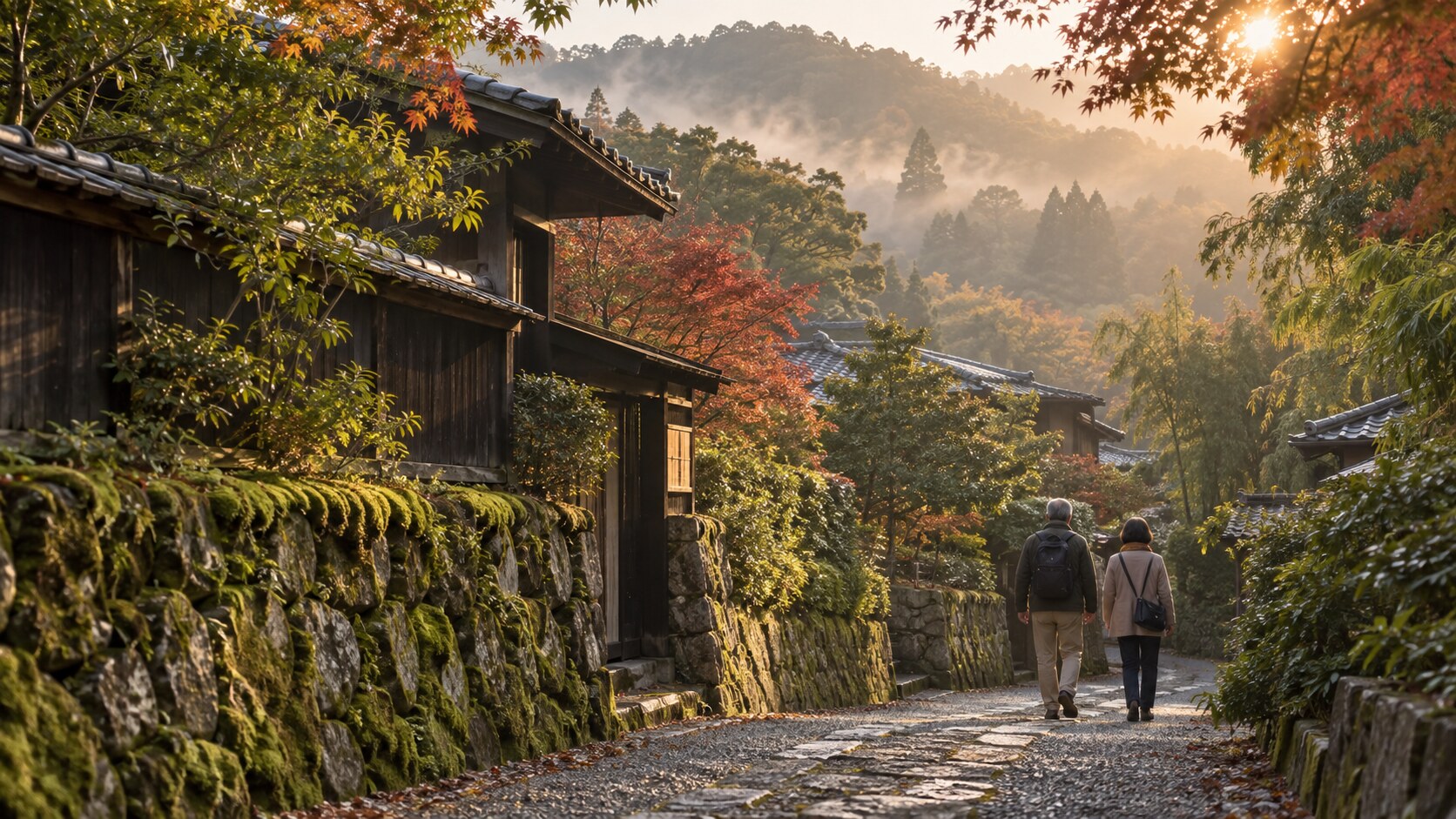
Imagine stepping onto a quiet stone path just after dawn in Kyoto’s northern hills. Mist still holds the wooded slopes. Somewhere nearby, a temple bell sounds once—low and resonant—then falls silent. Beneath your feet, gravel crunches softly; bamboo leaves stir overhead.
There is no checklist to conquer and no train you must catch. The morning unfolds at the pace of light moving across garden stones. Afternoon may dissolve into a long lunch of seasonal vegetables and delicate broth. Evening settles beneath paper lanterns, carrying the satisfaction of having done very little on schedule and a great deal that felt essential.
For anyone who has spent decades measuring life in deadlines and obligations, Kyoto offers something rarer than scenery: the feeling that time has finally slowed enough to be fully inhabited.
Kyoto’s deepest luxury is not what you can collect. It is how completely you can notice.
Why Kyoto rewards the unhurried traveller
Kyoto is one of those rare cities where seasonality, craft and careful attention still shape everyday life. Temple gardens, machiya townhouses, neighbourhood workshops and centuries-old food traditions coexist with a thoroughly modern city.
Its best experiences resist speed. A dry garden changes as you sit with it. A tea gathering is understood through gesture and silence. A residential lane becomes interesting only after the famous sight at its end has stopped pulling you forward.
That makes Kyoto especially rewarding for couples seeking shared quiet, solo travellers who enjoy independence without isolation and people over 50 who want depth without itinerary fatigue. This is not a destination to ‘complete.’ It is one to revisit—or stay long enough to recognize.
The best times to go
Cherry blossoms and autumn leaves do not follow a fixed appointment. Check current forecasts close to departure, then build a trip that still works if nature arrives early or late. Kyoto is more than its two most photographed weeks.
- Second half of April: Mild walking weather and spring colour after the most intense cherry-blossom rush, although timing varies every year.
- Late October through November: Crisp air and extraordinary maple colour. This is beautiful—and popular—so reserve early and visit headline temples at opening time.
- Early June: Green gardens and fewer peak-season visitors, with rising humidity and the beginning of the rainy season.
- Late September: Warmer and quieter than autumn foliage season, but typhoons remain possible. Keep plans flexible and watch official forecasts.
- July and August: Hot, humid and tiring for long days on foot. If summer is your only option, go out early, rest through the hottest hours and choose accommodation near a useful rail or subway stop.
- Winter: Cold and sometimes grey, yet wonderfully quiet. Empty gardens, clear air and steaming bowls of noodles create a different kind of beauty.
The sweet spot is not a perfect forecast. It is enough time to let one rainy morning become part of the story.
A seven-night rhythm that leaves room to breathe
Choose one comfortable base rather than changing hotels. Central Kyoto offers easy transport and dining; Higashiyama gives atmospheric early and late walks; the northern districts trade convenience for quieter mornings. Then give each day one anchor—not six.
- Day 1 — Arrive, settle in and walk only your immediate neighbourhood.
- Day 2 — Eastern Kyoto early: the Philosopher’s Path, Honen-in and one longer temple visit.
- Day 3 — A garden morning, a leisurely lunch and an unscheduled afternoon by the Kamo River.
- Day 4 — Western Kyoto: reach Arashiyama early, then continue beyond the bamboo grove into quieter lanes and temple grounds.
- Day 5 — Nishijin crafts, a machiya café and a tea experience or small workshop.
- Day 6 — A gentle countryside excursion or a second visit to the neighbourhood you liked most.
- Day 7 — No plan until lunch. Follow a lane, revisit a garden and buy one meaningful object directly from its maker.
A realistic travel budget
Reserve the expensive experiences that matter to you, then let ordinary pleasures carry the rest of the trip: a bakery breakfast, a riverside walk, a neighbourhood bath or one beautifully prepared bowl of soba.
- Accommodation for two: approximately C$180–C$350 a night for many comfortable hotels or guesthouses; C$450–C$800+ for an exceptional ryokan with dinner and breakfast.
- Food: about C$15–C$35 for a casual lunch, C$55–C$110 for a polished dinner and C$170–C$350+ per person for a special kaiseki experience.
- Getting around: public transport is comparatively modest; budget C$15–C$30 a person for a busy day, with extra room for a strategic taxi.
- Experiences: many temple and garden admissions are inexpensive. Tea gatherings, craft workshops and private guides vary widely and should be checked before booking.
Comfort, pacing and getting around
Kyoto is walkable but not effortless. A temple day can include gravel, stone steps, shoe removal, low seating and long distances between bus stops and gates. Popular buses may also be crowded. A few adjustments can protect the pleasure of the day.
- Wear shoes that are supportive and easy to remove; clean, comfortable socks matter more than you might expect.
- Alternate a walking-heavy morning with a seated experience, quiet lunch or garden visit.
- Use rail and subway routes where practical, and treat taxis as an energy-saving tool rather than a defeat.
- Carry a compact layer, water and any medication you may need; summer heat and shoulder-season temperature changes are real.
- Ask hotels and venues about stairs, lifts, beds and seating before booking. ‘Traditional’ can mean beautiful—and physically demanding.
Eat with the season
Kyoto cuisine is the quiet opposite of excess. It values restraint, precision and the clear expression of seasonal ingredients. Buddhist temple traditions shaped shojin ryori, while kaiseki turns a sequence of small courses into a meditation on flavour, texture, temperature and time of year.
Try yudofu—gently simmered tofu—near Nanzen-ji or Arashiyama; seasonal obanzai home-style dishes; handmade soba; and Kyoto vegetables prepared without disguise. Visit Nishiki Market with curiosity but remember that it is also a working place: move thoughtfully, follow posted rules and save eating for areas where it is welcomed.
Plan one memorable kaiseki meal if the cost feels comfortable. For the rest, seek small neighbourhood restaurants. A modest counter with six seats can hold as much care as a grand dining room.
In Kyoto, attention is an ingredient. Give a meal enough time to taste it.
Experiences worth lingering over
- Walk the Philosopher’s Path near the beginning or end of the day, then turn toward smaller temples rather than following the busiest stream.
- Sit at Ryoan-ji’s rock garden after the first wave of visitors moves on. The point is not to decode it, but to keep looking.
- Explore Nishijin, where weaving traditions and small workshops reveal a Kyoto shaped by making, not merely sightseeing.
- Spend an hour along the Kamo River at dusk. It is one of the city’s simplest and most democratic pleasures.
- Stay one night in a ryokan if budget and mobility allow. The sequence of arrival, bathing, dining and sleeping is the experience.
- Reserve Saiho-ji well ahead if its moss garden matters to you; admission is structured and advance arrangements are required.
Could Kyoto become a seasonal home?
A stay of one to three months can reveal far more than a fast visit. Depending on location and comfort level, a couple might use C$5,000–C$8,500 a month as an early planning range for a furnished apartment, meals, transport and regular experiences. Short-term furnished housing can be far more expensive than a local lease, so obtain real quotes before building a plan.
For Canadian passport holders, Japan currently includes Canada in its short-stay visa-exemption program; the period normally granted on arrival is 90 days. Entry permission is always determined at the border, and the rules should be rechecked before travel.
Japan does not have a broad, easy retirement visa. A specific Designated Activities visa permits eligible visa-waiver nationals to stay six months for sightseeing and recreation, with a possible extension to one year. It requires, among other conditions, savings of more than ¥30 million held by the applicant and spouse and private medical travel insurance.
That makes Kyoto appealing as a recurring seasonal destination, but permanent retirement requires a different legal basis. Anyone considering a move should obtain current Japanese immigration, tax and healthcare advice rather than relying on a travel article.
The honest trade-offs
- What Kyoto does beautifully: cultural depth, personal safety, public order, seasonal food, thoughtful service and experiences that reward quiet attention.
- What takes planning: peak-season crowds, summer heat, language differences and traditional spaces that may be difficult for travellers with limited mobility.
- What can surprise: the city is large and modern. The serene Kyoto of the imagination exists—but often at 7 a.m., one lane beyond the famous gate or after you have learned when to stop moving.
The B Side verdict
Kyoto is deeply worthwhile for travellers who measure a journey by quality of attention rather than quantity of sights. It suits couples seeking shared quiet, thoughtful solo travellers and anyone ready to trade itinerary intensity for depth.
It may disappoint visitors who need constant nightlife, easy conversation everywhere or a rapid sequence of headline attractions. Kyoto does not perform on command. It continues being itself and asks you to meet it halfway.
Rise early once. Choose a direction. Follow small shrines, residential lanes and neighbourhood bakeries until you are gently lost. In a life already full of accomplished days, remembering what it feels like when time is not the enemy may be worth the journey all by itself.
Do less. Stay longer. Let Kyoto become familiar enough to surprise you.