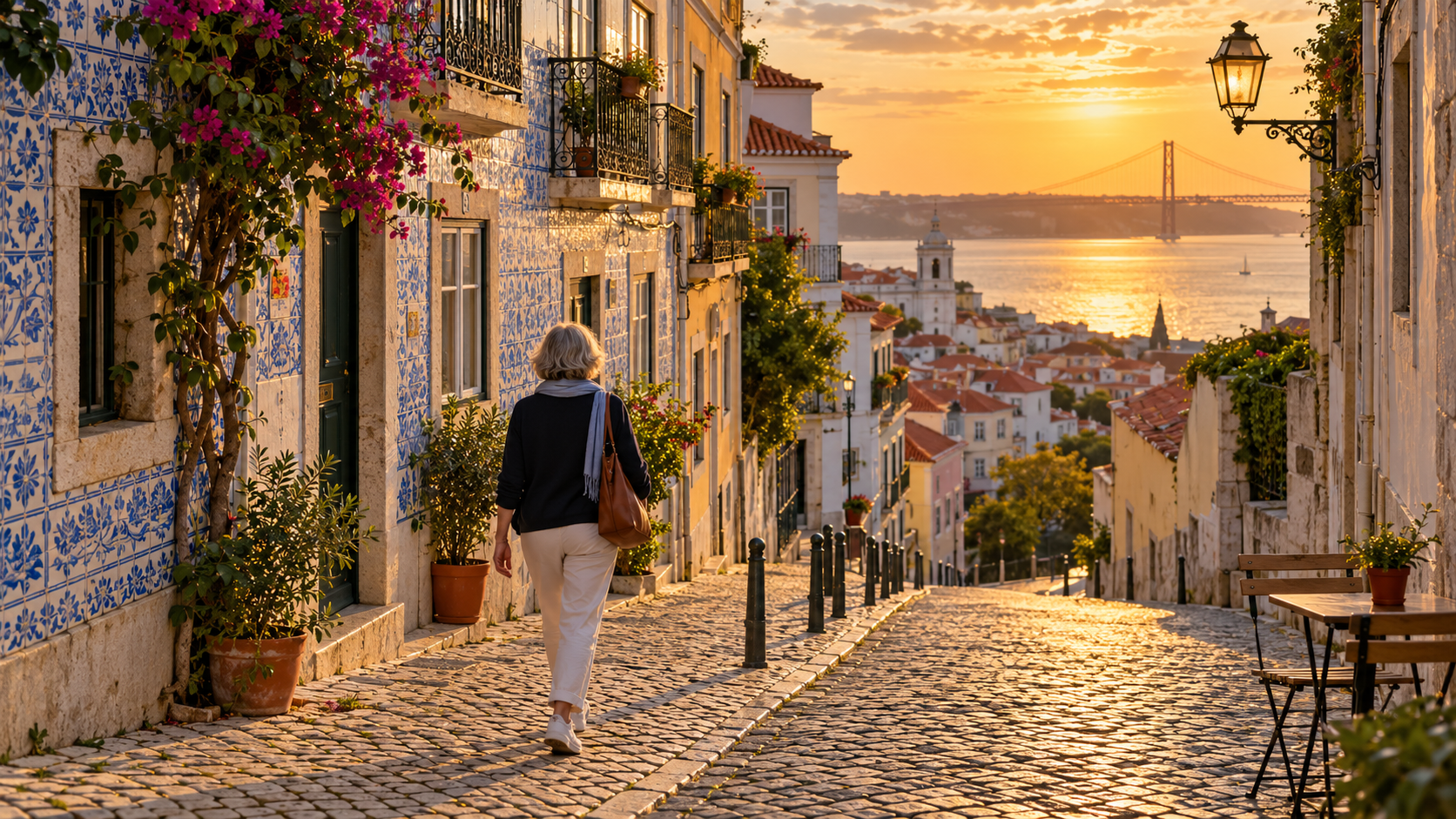
Lisbon can make you greedy. You land, look at a map and find tiled lanes, a castle, waterfront cafés, custard tarts and a famous yellow tram all competing for the same afternoon. Then somebody mentions Sintra.
It is tempting to collect the city: photograph a viewpoint, ride a tram, eat a tart, move on. Three days later you have seen plenty and can barely remember which hill held which view.
I would give Lisbon four days and plan much less. Pick a neighbourhood for the morning. Leave the afternoon loose. Sit down when you find a place you like. The city rewards that sort of attention.
One good morning plan is enough. Let the rest of the day earn its place.
First, make peace with the hills
Lisbon looks compact on a map. Its hills have other ideas. Six hundred metres can mean a steep climb over slippery cobblestones, and a route that looks easy at breakfast may feel much less charming by four.
Use a Metro, bus, tram, funicular or taxi to spare yourself a climb, then explore on foot as you come downhill. Nobody is handing out medals for walking both ways.
The Metro normally runs from 6:30 a.m. to 1 a.m. As of September 2026, a Carris/Metro ticket is €1.90 and covers eligible journeys for 60 minutes under its ticket rules. A 24-hour Carris/Metro ticket is €7.25. Metro zapping costs €1.72 per ride, while a contactless bank-card Metro ride is €1.92. Check current fares before you go.
Stay close enough to change your mind
For a first four-day stay, look around Baixa, Chiado or a conveniently reached edge of Alfama. A central room makes it easy to go out early, return for a rest and head back for dinner without turning each outing into a transport exercise.
Look closely at the hotel's actual street and entrance before booking. ‘In the historic centre’ can still mean a steep approach, stairs and an awkward suitcase walk. A Metro stop or reliable taxi drop-off nearby can make arrival day much nicer.
Day one: arrive, eat, get your bearings
Do yourself a favour and skip the ambitious arrival-day itinerary. Leave the luggage, walk toward Praça do Comércio and the river if you are staying nearby, then follow whichever street catches your eye.
Find coffee. Have a pastel de nata. Stay for a second drink if the table is good. There will be plenty of time for the monuments.
Eat dinner near your hotel. The first evening is for learning where you are, not for proving how efficiently you can cross Lisbon.
Day two: give Alfama a morning
Go early, before the narrow lanes grow busy. Alfama is best enjoyed without a rigid route: tiled façades, stairways that appear without warning, laundry overhead and quick views of the Tagus between buildings.
If you want one substantial historic stop, choose Castelo de São Jorge. Afterward, take the downhill route through the neighbourhood. Stop at a miradouro and sit for a while. A viewpoint is better when you actually spend some time with the view.
If you still have energy, keep walking toward Baixa. If your feet are finished, go back and rest. A holiday is allowed to contain an afternoon lying down.
Day three: Belém, at your own pace
Belém has enough monuments to make sensible people behave strangely. Choose the museum or historic site you most want to see. Give the riverside a proper walk, take time for lunch and, yes, try the local custard tart. Comparative pastry tasting is a respectable travel activity.
The Lisboa Card can be useful if you plan several included admissions and a lot of transit. The official card offers 24-, 48- and 72-hour options, public transport and entry to more than 50 cultural sites. Compare its current price and inclusions with your actual plans before buying.
If Belém Tower or Jerónimos Monastery is central to your day, check the card's admission rules carefully. As of this review, cardholders need a timed visit reservation for those sites after redeeming the physical card, and entry depends on available capacity. The card itself does not guarantee a slot.
A city card saves money only when your real day fits its inclusions.
Day four: choose Lisbon or Sintra
Sintra's palaces and gardens are worth a trip. They are also worth a whole day. On a four-day first visit, I would go if castles and romantic architecture are the reason you came. If you keep wishing for another day in Lisbon, stay put.
Return to a neighbourhood you liked. Browse a market or a shop selling Portuguese work. Take the ferry, find a park or enjoy a long lunch without watching the clock.
Missing a sight is not evidence of a failed trip. It may be evidence that you enjoyed being somewhere.
You can skip Tram 28
The yellow tram is lovely to see and often crowded to ride. Go early if the ride itself matters to you. Otherwise, watch it pass from a café table and take whichever route suits your day.
Lisbon has buses, other trams, Metro lines, funiculars and taxis. The postcard version of the city is only one way to get around it.
Spend where it changes the trip
Lisbon's central hotels can be expensive. A well-placed room may still be worth more to you than a cheaper one that adds a long journey at both ends of every day. Keep food costs flexible: choose one memorable dinner, then enjoy bakeries, neighbourhood restaurants and simpler lunches.
As of September 2026, the 24-hour Carris/Metro/CP ticket costs €11.40 and includes the eligible Sintra and Cascais rail lines. A contactless bank card works directly at Metro gates for single rides; remove the one card you intend to use from your wallet before tapping.
Pack walking shoes you have already worn for long days. Bring layers and, outside summer, a light rain jacket. If you fly with TAP, check the cabin baggage rules attached to your booking before you pack; its published Economy allowance includes one cabin bag and one personal item, subject to size, weight and route rules.
The one-thing-before-lunch rule
Each evening, decide on one place or activity for the next morning. That is your anchor. After lunch, decide what makes sense for the weather, your feet and whatever you found along the way.
You will have enough direction to get out the door and enough room to linger when a place deserves another hour. That is a better holiday than sprinting uphill to keep an appointment with a spreadsheet.
- Morning anchor: one neighbourhood, museum or historic site.
- Afternoon: leave it open until you know how you feel.
- Evening: choose somewhere you can reach and return from comfortably.
Could you spend a month here?
A longer stay changes the question. You could make separate trips to Sintra and Cascais, shop for groceries, cook some evenings and return to the same bakery until someone starts to recognize you.
For a month, a residential neighbourhood with good transit and a useful grocery store may suit you better than a room beside the busiest sights.
The test is simple: would an ordinary Tuesday here feel good? In Lisbon, it is easy to imagine the answer being yes. Once the monuments are out of the way, there is still a city worth being in.