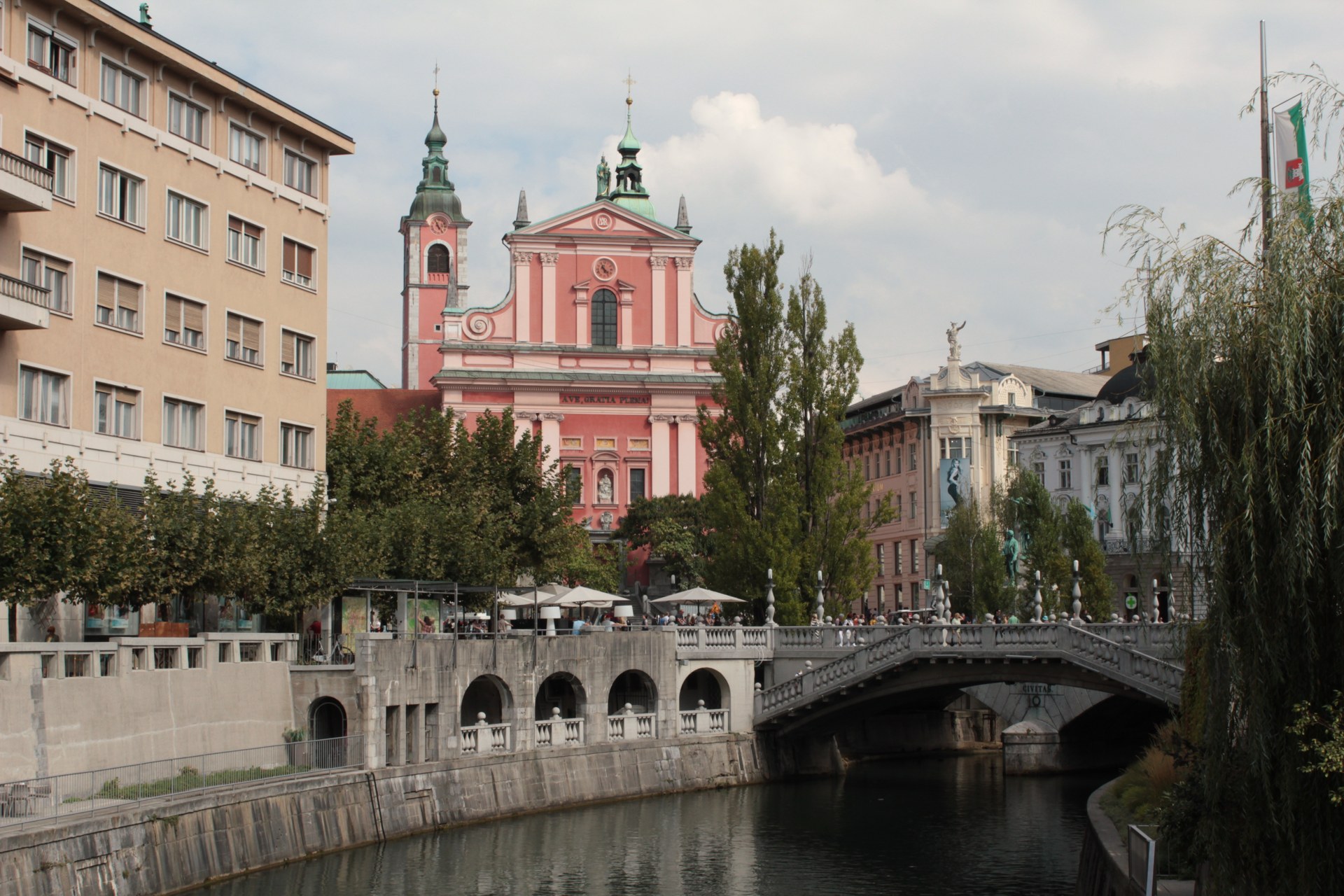
At half past eight, the café tables beside the Ljubljanica River are beginning to fill. A cyclist rings a bell. Someone crosses the Triple Bridge carrying flowers from the market, while delivery carts make their way through streets largely given over to people on foot.
Above the rooftops, Ljubljana Castle sits on its wooded hill. You could head up there now. But the morning is cool, there’s an empty table beside the water, and a coffee costs around €2.60.
The castle will still be there after breakfast.
Ljubljana encourages these small changes of plan. Its historic centre is compact and largely pedestrianized, so setting out rarely involves much preparation. You can wander along the river, stop at the market and find yourself somewhere lovely without consulting your phone every few minutes.
Beyond the city are lakes, forests, vineyards and Alpine valleys. There’s plenty to explore, yet remarkably little pressure to get moving.
Stay a few days and you’ll learn your way around. Stay a few weeks and you may start thinking about how you’d arrange your life here: which neighbourhood you’d choose, where you’d buy bread, whether that apartment above the café has a balcony.
It’s an appealing line of thought to follow over a second coffee.
📍 Why Ljubljana belongs on your bucket list
Slovenia sits between Austria, Italy, Croatia and Hungary, with the Alps at one end and a small stretch of Adriatic coastline at the other. Ljubljana makes a useful base for exploring this varied country, but it deserves more than the nights between excursions.
With fewer than 300,000 residents, it has the restaurants, museums, universities and services you’d expect from a capital, on a scale that’s easy to get comfortable with. You can spend a morning exploring and still have the energy to go out again after dinner.
Much of the city’s character comes from architect Jože Plečnik, whose bridges, market buildings, embankments and public spaces helped reshape Ljubljana in the first half of the twentieth century. His works here were added to UNESCO’s World Heritage List in 2021.
You don’t need to be an architecture enthusiast to appreciate them. Cross a bridge, browse the market or sit beside the river and you’re already enjoying something he helped create. The pleasure is in seeing how well these places still serve everyday life.
For a longer visit, that matters. Famous sights give you reasons to arrive; inviting streets give you reasons to keep going out.
🌤️ When to go
Ljubljana has four distinct seasons. Choosing your month will shape both your time in the city and what you can do beyond it.
April and May: the city turns green
Spring brings leaves to the riverside trees and more tables outside the cafés. April can be unsettled, so leave room for a museum afternoon when the rain arrives.
May is particularly appealing for walking, cycling and day trips. Daytime temperatures are often in the high teens or low twenties Celsius, though a waterproof jacket still earns its place in your bag.
June: long days and time outdoors
June offers a good balance of warm weather, green surroundings and long evenings. It’s an attractive choice if you want to combine the city with time in the Slovenian Alps, where hiking becomes increasingly accessible as conditions allow.
A day out can end with an unhurried dinner beside the river while there’s still light in the sky.
July and August: warmer, busier days
Summer temperatures often reach the upper twenties and can climb into the thirties during heat waves. Ljubljana becomes busier, and famous destinations such as Lake Bled attract noticeably more visitors.
A longer stay gives you some flexibility. You can save a popular excursion for a quieter day, take an early walk and spend the hottest part of the afternoon somewhere shaded.
September and early October: a lovely time to linger
Early autumn is especially tempting for a month-long visit. The days can remain comfortable, summer crowds ease, and the wine regions move into harvest season. In the mountains, the changing colours provide another reason to get outside.
Mid-September to mid-October is a promising window, provided you’re happy to pack layers and accept that some days will be wet. By October, evenings can be decidedly cool.
November to March: cafés, winter lights and the Alps
Ljubljana has a proper winter. Temperatures around freezing are normal in the colder months, and snow is possible.
The city still has its pleasures: busy cafés, good restaurants, Christmas markets and the Alps nearby. If you’re leaving Canada in search of warmth, though, you’ll probably want to continue farther south.
💰 What does Ljubljana cost?
Ljubljana remains reasonably priced compared with many Western European capitals, particularly when it comes to ordinary meals and cafés. Accommodation takes more careful planning. Its growing popularity means you shouldn’t arrive expecting bargain prices everywhere.
For a 2026 trip, the following figures offer a starting point. Treat them as planning estimates; dates, location and availability will make a considerable difference.
That last line needs some context. A resident signing a conventional lease is shopping in a different market from a visitor seeking a furnished apartment for exactly thirty days. Short stays usually cost more, sometimes substantially more.
When comparing apartments, check the full price, including cleaning fees, utilities and any other charges. A promising nightly rate can look rather different at checkout.
| Expense | Planning range |
|---|---|
| Guesthouse or simple hotel | €70–€110 per night |
| Good mid-range hotel | €110–€180 per night |
| Boutique or upscale hotel | €180–€280+ per night |
| Simple lunch | €10–€15 |
| Mid-range dinner | €20–€35 per person |
| Cappuccino | Around €2.60 |
| Local beer | Around €3.50 |
| Conventional one-bedroom residential rent | Roughly €800–€1,300 per month |
🏡 Could Ljubljana work for retirement?
It has several qualities that make it worth considering: a manageable centre, everyday life without a car, access to healthcare, and plenty of opportunities to walk, cycle and spend time outdoors.
Its location is another attraction. Italy, Austria and Croatia are close enough to make regional travel part of your life rather than an occasional major undertaking. You could spend a long time getting to know this corner of Europe.
But a pleasant holiday and a workable retirement are different things. Housing costs deserve a close look, as do residence requirements and health coverage. Renting or buying somewhere to live doesn’t, by itself, settle those questions.
For Canadian visitors, the usual Schengen limit is ninety days within any 180-day period. A longer stay requires the appropriate permission, and the details need checking before you make commitments.
A month is a useful first step. Choose an apartment, do your own grocery shopping and see what an ordinary Tuesday feels like. Include the rainy days, the laundry and the trip to the pharmacy. You’ll learn more from those routines than from a weekend when everything is arranged around having a wonderful time.
🍲 Eating in Ljubljana
Slovenian cooking reflects the country’s geography. Alpine, Italian, Balkan and Central European influences meet in food that feels well suited to the place: dumplings, stews, sausages, seasonal produce and cakes worth lingering over.
Local ingredients have a visible role. Ljubljana’s Green Supply Chains initiative links hospitality businesses with farms in the surrounding region, helping bring nearby produce into city kitchens.
You can make eating part of your exploration without booking a special restaurant every night.
Štruklji are rolled dumplings with sweet or savoury fillings, including cottage cheese, tarragon, apple and walnut. Trying one version gives you a perfectly respectable reason to try another later in the week.
Kranjska klobasa, or Carniolan sausage, makes a satisfying lunch with mustard and bread. It’s a straightforward pleasure after a morning on your feet.
Ričet is a hearty barley stew made with vegetables and often smoked meat. Keep it in mind for a cool day when you want something warming.
Potica is a rolled festive cake, frequently filled with walnuts, though there are other variations. Order a slice with coffee and allow yourself time to enjoy it.
Then there’s Slovenian wine. Much of it is less familiar abroad than it deserves to be. Ask for something local and tell the person serving you what you usually enjoy. A glass can lead to a conversation about a vineyard close enough to visit.
🧭 Seven experiences worth taking slowly
1. Make the river part of your daily routine
The Ljubljanica is worth returning to at different times of day. Walk one bank in the morning, cross over for lunch, then come back after dark when the lights settle on the water.
As you learn the bridges and side streets, the river becomes a familiar route through your days. Going out for dinner feels pleasantly easy when you can simply walk there and stroll home afterwards.
2. Shop at the Central Market
The market becomes much more interesting when you have a kitchen to stock. Look for bread, cheese, fruit, mushrooms, honey and whatever catches your eye that morning.
You may arrive with a dinner plan and leave with a different one. Give yourself permission to do that. Shopping is part of getting to know a place, especially when you return often enough to recognize a few stalls.
3. Leave a Friday free for Open Kitchen
Ljubljana’s Open Kitchen food market brings restaurants and chefs from around Slovenia to Pogačarjev trg on Fridays during its outdoor season, weather permitting. Check the schedule before you go.
Arrive hungry, have a look around and choose a few things to try. It’s an enjoyable way to sample the food scene without committing the whole afternoon to a formal lunch—although you may end up staying just as long.
4. Go up to the castle
Walk up to Ljubljana Castle when you feel like stretching your legs, or take the funicular. Either way, the view helps you understand the city below: the curve of the river, the compact centre and the green surroundings beyond.
Try to leave some time for simply looking. After a few days in town, you’ll begin picking out places you recognize.
5. Choose a good day for Lake Bled
Lake Bled earns its reputation. The island church, the castle and the mountains really do come together as beautifully as the photographs suggest.
If you’re based in Ljubljana for a while, watch the forecast and choose your day. Walk beside the lake, have lunch and leave enough time to enjoy being there before returning to the city.
6. Give Lake Bohinj a day of its own
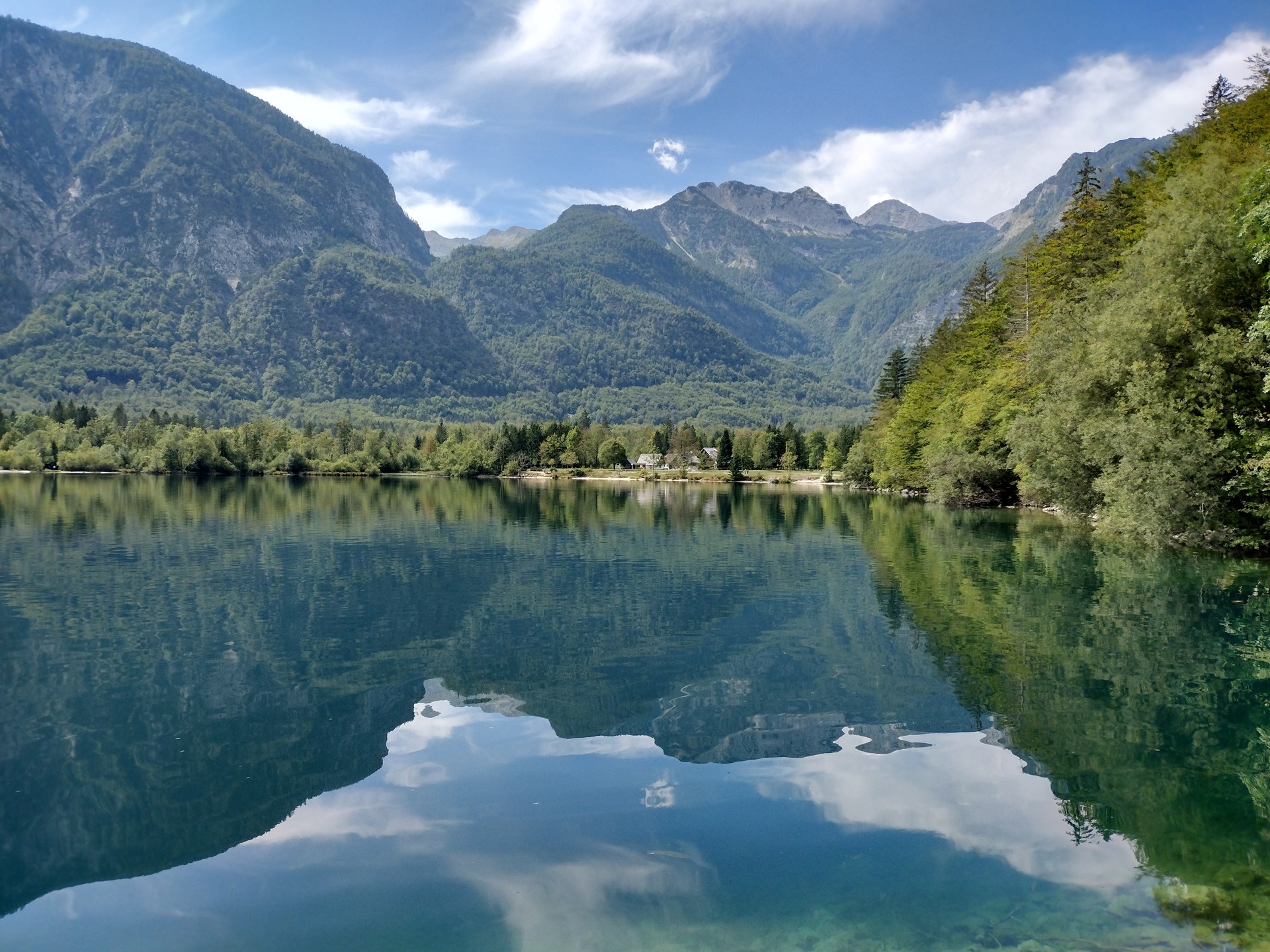
Bohinj offers a different feeling: a larger lake, a wilder setting and the Julian Alps all around. Depending on the weather and your interests, you might walk, take a boat trip or head out on a suitable hike.
It deserves time. Trying to squeeze both Bled and Bohinj into one busy excursion leaves less room for the things you may enjoy most once you arrive.
7. Venture beyond the familiar streets
Look at the rail and bus routes and choose somewhere that interests you: a smaller Slovenian town, wine country or a trip across the border. An overnight visit to Trieste or a longer excursion into Austria can add another layer to your stay.
Check connections and journey times first; a short distance on the map doesn’t always mean a simple trip. Part of the pleasure, though, is having a base to return to. Coming back to familiar streets after a few days away can feel surprisingly comforting.
⭐ The moments you may remember longest
Some will be the scenes you hoped for: still water at Lake Bled before the day gets busy, a walk in the Julian Alps with cowbells carrying across a valley, or Ljubljana’s rooftops catching the evening light from the castle hill.
Others may be harder to predict. A wine you order because you’ve never heard of it. A conversation that keeps you at lunch longer than expected. An afternoon when you meant to see something important and ended up happily watching the river.
Slovenia gives you a remarkable variety of landscapes within a small country. You can enjoy that variety without turning every day into an excursion.
❤️ What an ordinary day might feel like
By the third week, you’ve found a few habits.
Breakfast is at the apartment: bread, yoghurt, honey and coffee. The sky is clear, so you decide the museum can wait until a wetter afternoon. Today looks like a good day for a bicycle ride.
You head out through the city and into green space, stop for lunch, then make your way back without much urgency. There are vegetables to buy for tomorrow and perhaps a loaf of bread if the bakery is still open.
Later, you sit beside the river with a glass of white wine. People pass on their way home. Someone at the next table is meeting a friend. You’re pleasantly tired and beginning to think about dinner.
There’s no particular achievement to report. You’ve been outside, eaten well and enjoyed the company of the city. On a longer trip, days like this often become the ones you miss.
⚖️ The pleasures—and the compromises
Ljubljana’s size is one of its greatest advantages. The centre is easy to learn, everyday outings involve little fuss, and countryside excursions can add variety when you want it. Walking and cycling fit naturally into a visit, while the markets and restaurants make eating well an uncomplicated pleasure.
That same small scale won’t suit everyone. If you want an endless choice of major museums, performances and late-night venues, you may eventually want a larger city.
Accommodation can also be a frustration, particularly if you’re looking for a comfortable furnished apartment at a modest price. And the weather needs accepting on its own terms. Autumn brings rain and cool evenings; winter won’t provide an escape from the cold.
For some travellers, those are reasonable compromises. For others, they’ll shape the length or season of the stay.
🏡 Could I actually stay here for a month?
Yes—and a month gives Ljubljana time to become more than a pretty stop on an itinerary.
For a first extended visit, consider Krakovo, Trnovo, Prule or the quieter edges of the centre. Look at the exact address and walking distances rather than relying on the neighbourhood name alone. Somewhere close to groceries and a pleasant route into town may serve you better than an apartment on the busiest street.
A furnished apartment
As an initial planning allowance, set aside €1,100–€1,700 for a month in an attractive one-bedroom apartment in a useful location. Availability and season may push the price higher, so check actual listings before building the rest of your budget around this range.
Confirm what’s included, especially utilities, cleaning and laundry facilities. For a longer stay, a comfortable chair, a usable kitchen and a quiet bedroom become more valuable than they might be for a weekend.
Groceries, restaurants and cafés
For two people cooking regularly, €350–€500 a month for groceries is a useful working estimate. Markets and supermarkets make it straightforward to put together breakfasts, simple lunches and dinners at home.
Allowing €350–€550 for restaurants and cafés gives you room for regular outings, with the balance depending on how often you eat out and where. A couple of ambitious dinners can quickly change the total.
Getting around
Walking and cycling can cover much of daily life if you choose your location well. Buses are useful for longer journeys, and you don’t need to keep a car simply because you’re staying for a month.
Consider renting one for selected countryside trips instead. Before booking, compare the cost with bus or train connections and check parking at your accommodation.
Healthcare and staying connected
Ljubljana has hospitals and specialist services, but Canadian visitors need to make their own arrangements for appropriate travel medical coverage. Anyone considering residence will also need to understand the applicable insurance and registration requirements.
For internet, check the rental itself. Ask about the Wi-Fi connection and, if video calls matter to you, request a recent speed test. A listing’s promise of “high-speed internet” tells you less than you might hope.
Everyday life
Groceries, pharmacies, cafés and transport are accessible enough to make a longer stay practical. The bigger challenge may be finding the right apartment at the right price.
Sunday also takes a little adjustment. Shopping options and opening hours can be limited, so get what you need ahead of time. Once you’ve settled in, you may welcome having a quieter day built into the week.
A working budget for two
These are planning estimates for a comfortable stay without luxury spending. International flights, travel medical insurance and overnight trips elsewhere are additional. If utilities are included in your rent, adjust that allowance accordingly.
| Expense | Monthly allowance |
|---|---|
| Furnished apartment | €1,100–€1,700 |
| Groceries | €350–€500 |
| Restaurants and cafés | €350–€550 |
| Local transport and occasional car rentals | €150–€350 |
| Activities and day trips | €250–€500 |
| Phone, utilities and miscellaneous expenses | €150–€250 |
| Total | €2,350–€3,850 |
🧳 Is Ljubljana worth staying for?
Ljubljana is especially appealing if your idea of a good trip includes walking, food, culture and time outdoors, with enough room between them to enjoy your days.
You can spend Monday at the market and Tuesday beside an Alpine lake. Wednesday might be laundry and lunch, followed by a walk you’ve come to like. By Friday, you’re ready to see what’s cooking at Open Kitchen.
The ordinary days belong in that picture too. A month doesn’t need thirty days of sightseeing to feel well spent.
Eventually, you’ll know which bridge takes you home and which bakery is worth a small detour. You’ll have a preferred place for coffee, perhaps a table you hope will be free when you arrive.
One morning, you’ll sit down there and realize you haven’t taken a photograph of the river in days. You’re still glad to see it. You’ve simply become comfortable enough to let the moment pass without keeping a record.
That’s a good reason to have stayed.
🌍 If you loved Ljubljana, you might also like…
Graz, Austria: A manageable city with handsome architecture, good food and nearby wine country, offering plenty to explore over a longer visit.
Trieste, Italy: Adriatic views, literary cafés and Habsburg architecture, with Slovenian landscapes close enough to keep exploring.
Salzburg, Austria: A more expensive option with a beautiful historic centre, a rich musical life and excellent access to Alpine scenery.