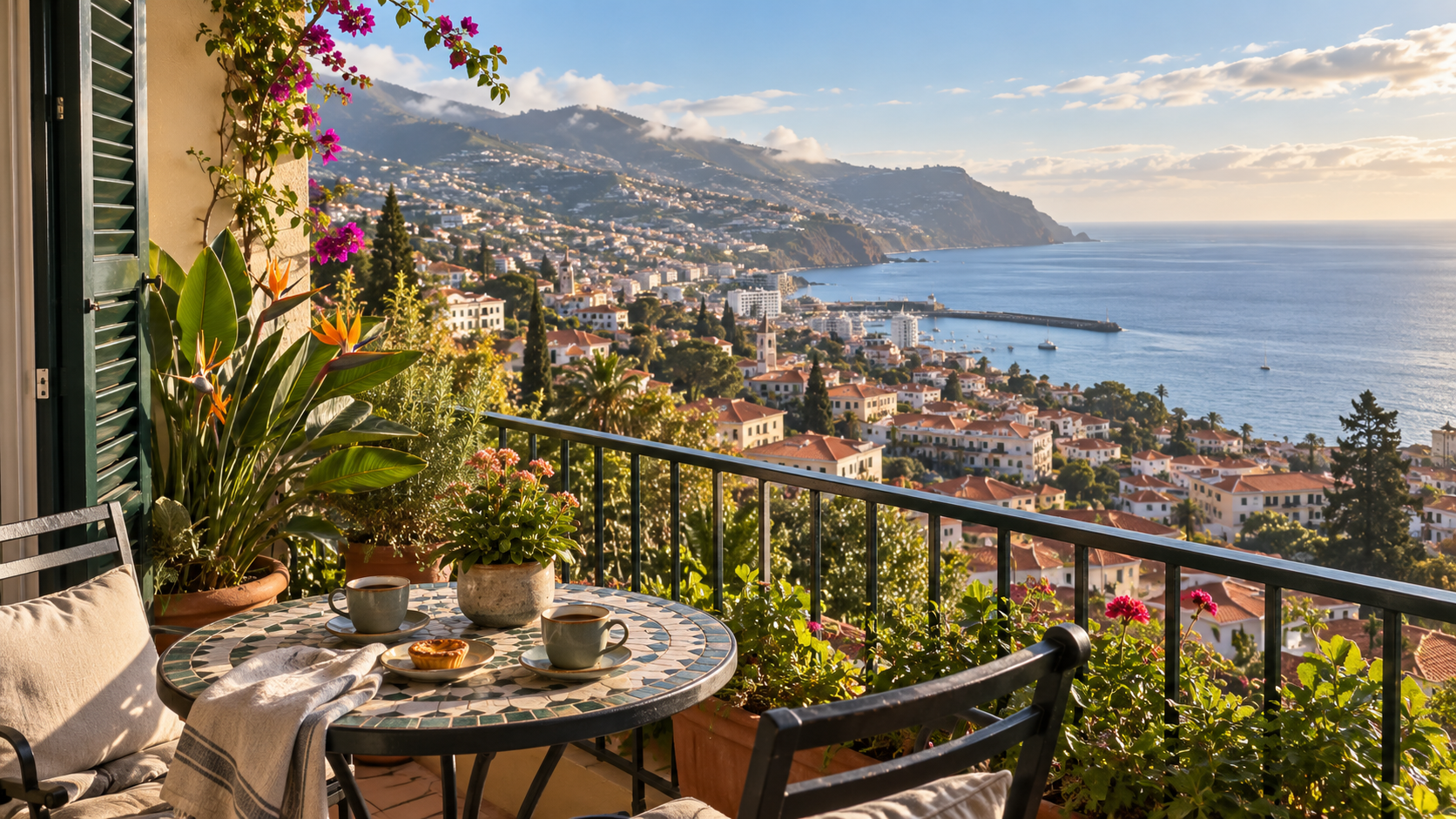
Picture a morning in Funchal. The balcony door is open, someone is making coffee below, and the Atlantic seems to take up more room than any sea ought to. You could go to the market. You could drive into the mountains if the clouds lift. You could spend another hour at the table.
That last option is the reason I would give Madeira more than a hurried week. The island offers enough scenery for an exhausting itinerary, but its real appeal shows up when you stop trying to see all of it before Friday.
Stay long enough to learn which bakery opens early and which direction takes you downhill to the sea. Then ask yourself whether two weeks could become a month.
The best test of a place is whether you would enjoy a normal Tuesday there.
Why Madeira keeps pulling people back
Mountains rise straight from the Atlantic. Terraces cling to improbable slopes; tunnels turn a coastal drive into a series of surprises. There are gardens, villages, black rock pools and forest that feels far older than the road that brought you to it.
The Laurisilva is a UNESCO World Heritage site and the largest surviving expanse of its kind. Yet Madeira is not merely a set of scenic stops. Funchal is a working city with supermarkets, buses, cafés and people going about their lives.
That combination matters. You can seek out a dramatic ridge or levada, then return to an ordinary dinner near your apartment. The island has enough variety to fill a month without forcing you to change beds every third night.
Choose a season, then expect several kinds of weather
Madeira's mild climate is a selling point, with the tourism authority giving broad average temperatures of roughly 17°C in winter and 25°C in summer. The small print is topography. A sunny coast and a foggy mountain can exist on the same morning.
Spring is lovely for flowers and walking. Summer is warmer and busier. I would look particularly hard at late April through May or late September through November: pleasant exploring weather with a little more room around you. Winter is a welcome alternative to a Canadian February, though rain and mountain cloud need to be part of the plan.
If you're going around Christmas or New Year's, book early. Funchal's holiday celebrations draw visitors. At any time of year, keep a coastal day ready when the high country disappears into cloud.
- March–May: gardens, green hillsides and generally comfortable walking days.
- June–August: warmer swimming weather and greater demand for rooms.
- September–November: a good bet for unhurried exploring, with more changeable weather later in autumn.
- December–February: mild winter days for city walks and excursions, plus a greater need for weather flexibility.
Give Funchal more than your evenings
I would use Funchal as a first base. Walk the waterfront before the day gets busy. Browse the market, find a coffee place you like, ride the cable car to Monte if it appeals, and take a different route home.
The point is to do some things twice. A café becomes better when you stop consulting a map to find it. A market becomes more interesting when you know which stall sold you the good fruit last Tuesday.
For a longer stay, check the apartment's exact slope as carefully as its ocean view. 'Five hundred metres from the waterfront' may conceal a climb that changes how often you want to walk home.
Walk a levada, but do your homework
Madeira's levadas are irrigation channels, many accompanied by paths through forest and valleys. Choose a route for the distance, exposure and terrain you actually enjoy. The famous one is not automatically the right one.
This is also one part of the trip that no longer rewards total spontaneity. Since January 2026, the island's classified PR walking trails require advance time-slot reservations through the official SIMplifica portal. The general visitor fee is usually €4.50, with some route-specific rules. Check the current trail page, weather and open-or-closed status before setting out.
Book the walk you want, then leave the hours around it loose. A careful plan for a trail is compatible with an otherwise relaxed holiday.
Spend a night on the north coast
Porto Moniz's volcanic pools are worth seeing. Staying the night is better. Once day visitors leave, you can listen to the Atlantic instead of waiting for an opening between selfie groups.
Make the north coast part of an unhurried loop. Fanal's old laurel trees can be astonishing in mist, but the weather can also make roads and paths uncomfortable. Change plans when you need to.
I would rather enjoy three places properly than spend a day driving to fourteen stops and remembering mostly the parking.
Câmara de Lobos, Porto Santo and the days between
Give Câmara de Lobos an evening. Arrive while the fishing harbour is still active, stay for dinner and let the town be more than a quick view from a roadside lookout.
For a longer trip, Porto Santo makes a good contrast: a long sandy beach after Madeira's steep drama. Check ferry schedules and sea conditions, and consider sleeping there rather than treating the crossing as another same-day achievement.
Some of my favourite Madeira plans are less tidy: drive across the island, stop when a view catches you, have lunch and leave the other side of the map for another day.
Come hungry
Madeiran cooking knows what to do with garlic. Order espetada, the grilled beef skewers traditionally associated with bay laurel. Have warm bolo do caco with garlic butter and abandon any idea that one piece will be enough.
Try black scabbardfish, or espada, even if the banana pairing gives you pause. And try poncha, the sugar-cane spirit drink mixed with citrus and other ingredients. It tastes gentler than it is.
The other pleasure is less famous: buying bread, fruit, vegetables and fish for your own dinner. A month of restaurant meals is a holiday. A month that includes a market habit begins to feel like a life.
Could I actually stay here for a month?
Yes, but I would test Funchal before signing myself up for a remote ocean-view hideaway. A central or well-connected neighbourhood gives you shops, pharmacies, cafés, buses and the option to leave a rental car parked—or skip it for much of the month.
Rent a furnished apartment. Cook several meals. Use the bus. Do laundry. See how the place feels after rain changes two plans in a row. That is the experiment a seven-night resort stay cannot run.
For Canadians, Portugal is in the Schengen area. Visa-free tourism is generally limited to 90 days in any rolling 180-day period across all Schengen countries, not 90 days per country. A longer stay needs the appropriate visa. Check the rules before treating a trial month as the first step toward moving.
Try the groceries, bus routes and rainy Wednesdays before you picture a permanent address.
A sample month budget for two
Use these euro amounts as planning allowances, not promises about current listings. Furnished rentals, season, location and ocean views change the total quickly. Check live apartment quotes for your dates before committing.
A comfortable, self-catered month could land around €2,300–€4,050 for two before flights, depending heavily on the apartment and how often you eat out. The bottom end requires discipline and a good rental find; the top end leaves room for excursions and restaurant nights.
- Furnished one-bedroom apartment: allow roughly €1,200–€2,000+.
- Groceries for two: allow roughly €250–€400.
- Restaurants and cafés: allow roughly €300–€600.
- Buses, taxis and some car rental: allow roughly €150–€300.
- Activities and excursions: allow roughly €250–€500.
- Miscellaneous expenses: allow roughly €150–€250.
Getting around without renting a car for 30 days
The regional SIGA bus network has prepaid daily and tourist tickets, including 1-, 2-, 3-, 5- and 7-day options. Coverage depends on the ticket, so check the current route and fare information rather than assuming a pass reaches every trailhead.
I would combine buses and occasional taxis with a car for the days that benefit from one. Madeira's tunnels and main roads are useful, but smaller roads can be steep and narrow. You do not have to drive every mountain lane to have a good visit.
Keep travel medical insurance that covers your plans. A month abroad is still abroad, and Canadian provincial health coverage is no substitute for appropriate travel coverage.
The brochure is quieter about these bits
Madeira is steep. 'Walkable' depends on which side of a hill your accommodation is on. Some hikes have exposed edges; some mountain roads demand attention. Rain and cloud are part of the landscape, especially away from the south coast.
The furnished apartment with a balcony, ocean view, central location and sensible price is also everybody else's dream apartment. Book early enough to have a choice, or relax one requirement.
An island can feel beautifully contained for a month and confining after six. Those are different tests. You can enjoy the first without needing to commit to the second.
My verdict
If you want long sandy beaches, nightlife and a museum every afternoon, I would put Madeira lower on your list. If you want mountain walks, ocean air, markets, gardens, garlic bread and mornings that can change direction, go.
Stay in Funchal long enough to develop a routine, then give the north coast a night or two. Make a few deliberate plans and allow the weather to edit the rest.
You may arrive wondering what there is to see. The more interesting question, a couple of weeks later, is what it would cost to stay. By then you may also have a favourite bakery. That is a better souvenir than a crowded itinerary.
If Madeira stays on your mind
The Azores, especially São Miguel, offer crater lakes, hot springs and a quieter, wetter Atlantic mood. The Canary Islands offer a wider range of landscapes and longer winter-stay possibilities. Porto Santo gives you sand and space just across the water.
Madeira's particular gift is the way a functioning city and a wild mountain island sit so close together. You can be a visitor in the morning and, for an hour over coffee, feel almost like a regular.