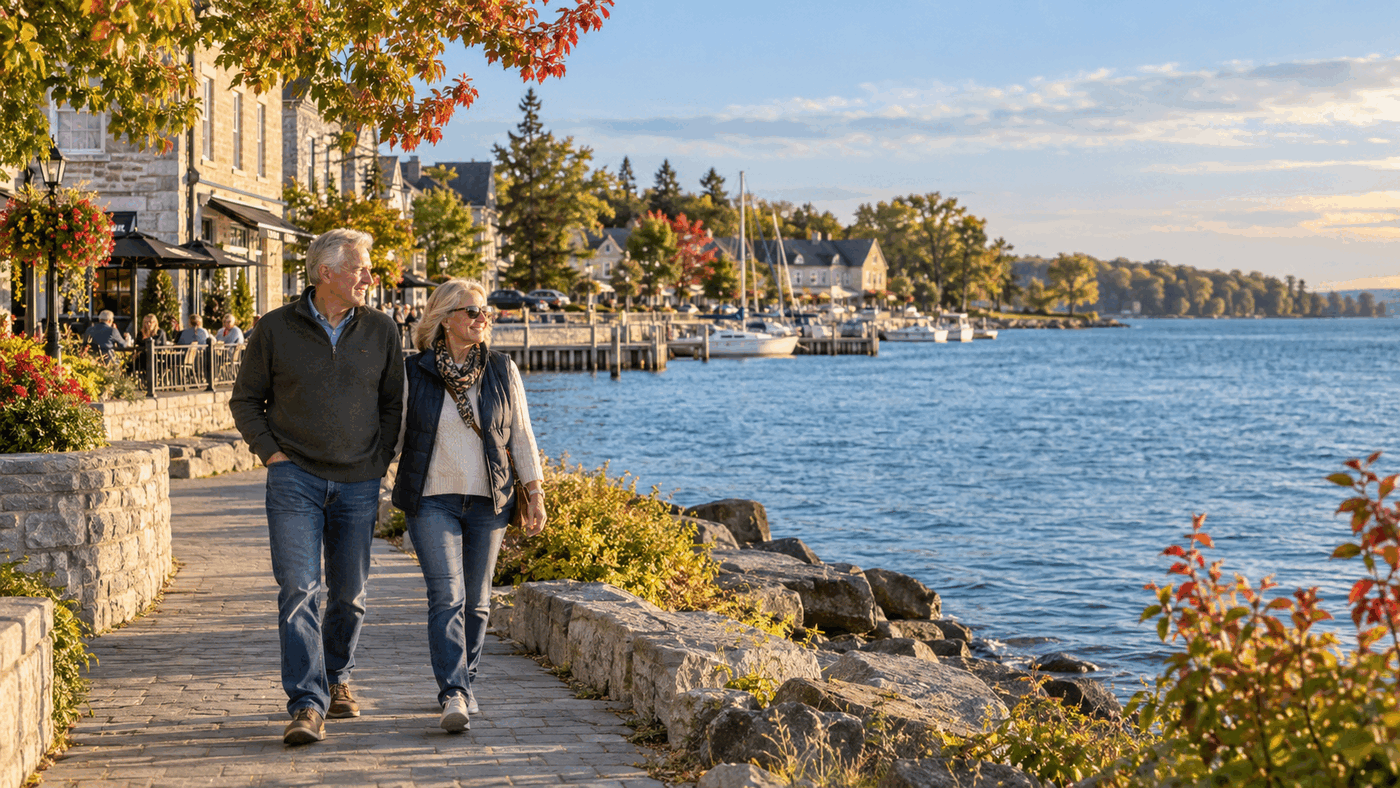
September has a useful little secret: summer is not quite finished, autumn is beginning to show off and many travellers have already packed away their suitcases. For adults over 50 with flexibility in their calendars, it can be one of Ontario’s most rewarding travel seasons.
There is a moment when the province seems to exhale. School buses return to the roads. Cottage docks grow quieter. Restaurant patios still have tables outside, but you can sometimes claim one without negotiating like a diplomat. The lakes remain blue, afternoons can still be warm and somewhere north of you the first maple has begun turning red.
If your schedule is no longer dictated by school holidays or two precious weeks of annual vacation, you have an advantage worth using: you can travel when everybody else is going home.
Three well-planned days can feel far more satisfying than seven frantic ones.
Why September deserves its own travel season
September is often treated as the hallway between summer vacation and Thanksgiving. That undersells it badly. Early in the month can feel distinctly summery; later weeks bring cooler evenings and increasingly dramatic foliage.
The trick is not to wait for peak colour everywhere at once. Ontario Parks’ live report showed Algonquin and Killbear at about 10 percent colour change in mid-September 2026, with green still dominant. The transition itself is beautiful—and it gives you a reason to travel before the leaf-peeping rush.
Travel Sunday through Thursday and the rhythm changes completely. Stay two or three nights instead of racing home after a day trip. Have breakfast at nine instead of joining the highway parade at seven.
Build the trip around one good base
A common short-trip mistake is trying to cover too much territory. If you have three nights, you do not need three hotels.
Choose one interesting town or small city and use it as your base. Kingston, Ottawa, Stratford and Collingwood work especially well because the destination itself is worth exploring—you are not merely sleeping there before driving somewhere else.
- Good walking from the hotel
- A historical or cultural attraction you genuinely want to visit
- A worthwhile natural area within about an hour
- Enough restaurants that dinner does not become a nightly search for the last open kitchen
Your base should be part of the holiday—not merely the accommodation.
Give every full day one anchor experience
Putting five things on an itinerary does not mean you will enjoy five things. Sometimes it simply means spending the day checking your watch.
Choose one anchor: a historic site, a three-hour hike, a food tour, a museum, a bicycle ride, a boat excursion or an afternoon in a nearby town. Everything else becomes optional.
Kingston offers a good example. Fort Henry’s 2026 fall program runs Wednesday through Sunday, September 9–27, from 10 a.m. to 4:30 p.m. Adult and senior admission is CAD $13 plus HST. Let the fort be the day—not the thing squeezed between breakfast and lunch. Tour slowly, stop for coffee afterward and walk the waterfront.
You are travelling, not competing on The Amazing Race.
Add nature without turning it into an expedition
A provincial park day can be as ambitious or relaxed as you want. Ontario Parks allows advance daily vehicle permits at most operating parks up to five days before arrival. At participating parks, booking ahead guarantees access—especially useful on beautiful fall weekends.
Stay in a nearby town with restaurants and comfortable accommodation, then make the park your daytime excursion. Choose a trail based on what you genuinely enjoy, not what your age supposedly permits.
- A two-kilometre shoreline walk followed by lunch beside the water is a perfectly good park day.
- If you are fit and love challenging terrain, being over 50 is no reason to downgrade every outing to a paved loop.
- Match the outing to your actual ability, energy and interests—not the number on your birthday cake.
Consider letting the train do some of the driving
A short Canadian trip does not automatically require a car. Rail can work beautifully when your destination has a walkable centre and you plan to stay put for a few days.
As of September 2026, VIA Rail passengers 65 and older can receive 15 percent off qualifying Economy Plus, Business and Business Plus fares across Canada when booking at least 30 days ahead. The promotion is available for qualifying travel from September 9, 2026 through April 30, 2027, when booked by January 5, 2027. Fare exclusions and conditions apply.
Even without a promotion, compare the entire cost of driving: fuel, parking, vehicle wear, downtown hotel parking and the fact that someone spends hours watching Highway 401 instead of Ontario passing the window. Rail is not always cheaper or practical, but for city-to-city travel it deserves to be priced before you reach automatically for the keys.
Spend money where you will notice it
Shoulder-season travel is a good place to practise selective luxury. For a three-night getaway for two, a rough working budget might be CAD $800–$1,200 before major shopping, depending on the destination and hotel.
A comfortable hotel within walking distance of restaurants and the waterfront may cost $30 or $50 more per night, but it can remove parking hassles and let both people enjoy dinner without negotiating who drives. One memorable $120 dinner may also bring more pleasure than three forgettable $70 dinners.
Spend deliberately rather than uniformly. Choose the things that will actually change how the trip feels.
A realistic three-night September plan
Notice what is missing: no 6:30 a.m. alarm, no hotel change, no three-hour detour because the internet called something unmissable—and no arriving home exhausted enough to need a recovery day from your relaxing getaway.
- Day one — Travel after the morning rush. Arrive around lunch, leave your luggage and explore your base on foot. Skip the major attraction. Have a good dinner and take an evening waterfront or neighbourhood walk.
- Day two — Make this your culture and history day. Visit your chosen museum, historic site, gallery or neighbourhood in the morning. Leave the afternoon open for a café, market, shops—or simply sitting somewhere interesting.
- Day three — Head outdoors. Reserve park access ahead if required, pack lunch and choose one substantial walk or outdoor activity. Return to town before dinner instead of adding another attraction.
- Day four — Have breakfast somewhere you missed, take one final walk and head home before late-afternoon traffic builds.
Pack for three seasons in one day
September packing is mostly an exercise in layers. Morning may require a light jacket; by lunch you may be carrying it; evening beside Lake Ontario can remind you quickly that July has left the building.
Bring a lightweight waterproof shell, comfortable walking shoes, a warmer layer for evenings and a small daypack. For park outings, carry water, snacks and a basic first-aid kit. Wear a properly fitted PFD whenever you use a canoe, kayak or other watercraft.
Check the forecast and local conditions shortly before leaving rather than packing according to what September felt like ten years ago.
Build your escape this week
If the answer is yes to all four, you probably have the bones of a very good trip. Do not wait for peak leaves, perfect weather or a spectacular airfare. Sometimes the best travel opportunity is simply realizing that Tuesday belongs to you now.
- Can we walk to dinner from the hotel?
- Is there one cultural or historical experience we genuinely want to see?
- Is there one outdoor area worth half a day?
- Can we leave at least one afternoon mostly unscheduled?