There is a peculiar pressure that can appear when you finally have more control over your time. You waited years for this freedom, so surely you should do something impressive with it.
Exercise. Travel. Volunteer. Learn Italian. Renovate the basement. Organize the photographs. Join a club. Read the classics. Become suspiciously good at sourdough. Even enjoyable activities can begin forming a rather intimidating retirement résumé.
Then a rainy Saturday arrives. You make coffee, read for a while, putter around the house, take a short walk and talk to someone you care about. By evening, nothing impressive has happened—and a small voice asks whether you wasted the day.
Probably not. You may simply have lived it.
Some days are allowed to be good without becoming accomplishments.
The old scoreboard can follow you home
For much of adult life, productivity is rewarded. We finish projects, meet deadlines, answer messages, solve problems and cross items off lists. A productive day feels successful because it leaves evidence behind.
Retirement changes the arrangement, but our internal scoreboard does not necessarily retire with us. Free time can quietly inherit the standards of working life: What did I accomplish? What did I improve? What am I doing tomorrow?
There is nothing wrong with ambitious goals. Retirement can be an excellent time for learning, contribution and projects. The difference is between choosing to be productive and feeling guilty whenever you are not.
Not everything worthwhile leaves proof
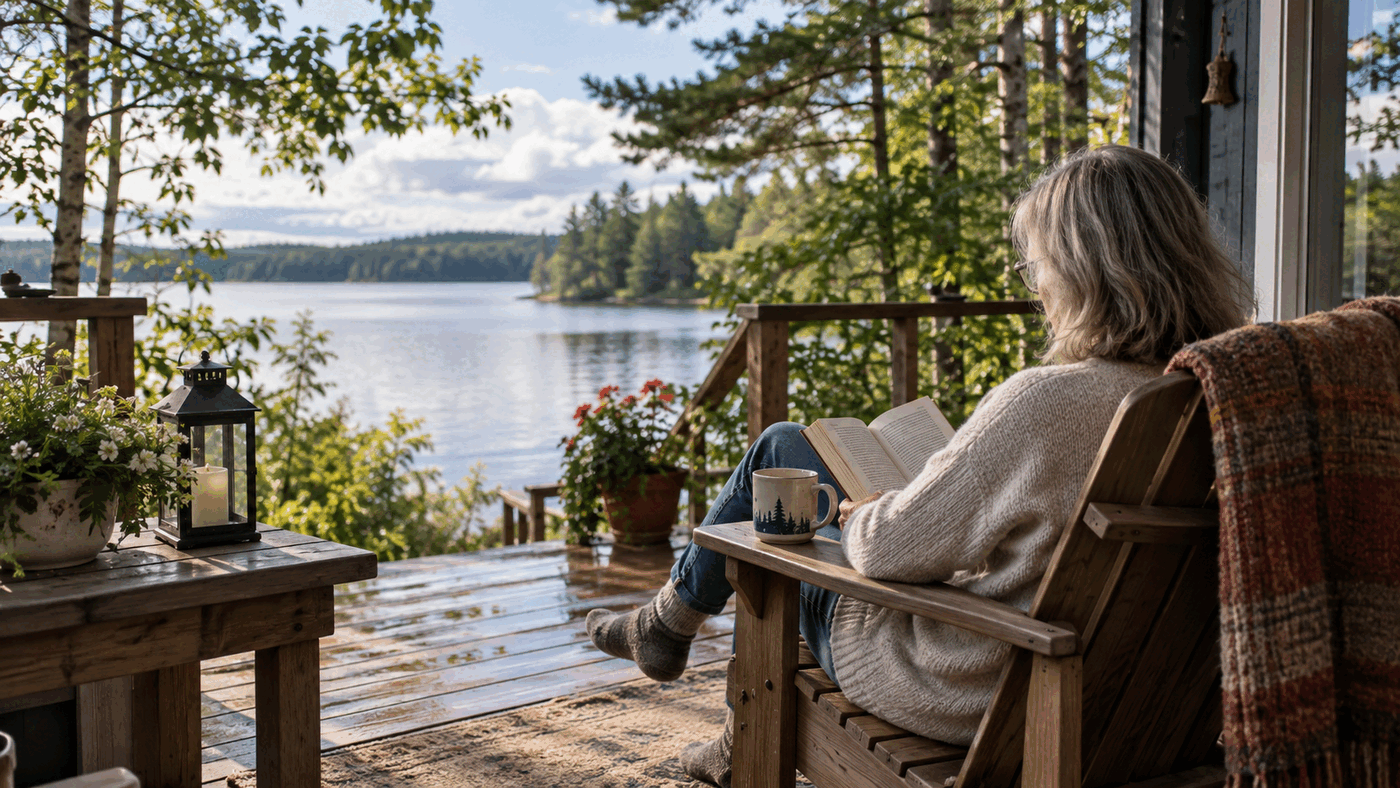
Think about sitting beside water, talking over coffee, reading in a comfortable chair, listening to music, watching birds quarrel over a feeder, cooking something slowly or standing outside after dinner because the evening happens to be beautiful.
These moments rarely produce anything measurable. No certificate arrives. Nobody updates your résumé. There is not even a checkbox. Yet they can make a day feel deeply satisfying.
A life composed entirely of accomplishments would be surprisingly exhausting. We need spaces between them.
The afternoon Margaret stopped scheduling
Margaret had been retired for two years and had become exceptionally good at filling her calendar. Monday was exercise. Tuesday was volunteering. Wednesday held errands and lunch with a friend. Thursday was a class. Friday belonged to household projects.
She enjoyed it all, but retirement was beginning to feel busy in a familiar way. So she protected one afternoon each week from plans—no appointments, no errands she might as well finish and no project waiting to justify the time.
At first, the empty hours felt strange. Then she began enjoying them. Sometimes she walked or read. Once she drove out for a particular coffee. Another afternoon she sat outside much longer than expected because the weather was unusually pleasant.
The unscheduled afternoon became one of her favourite parts of the week. She had not added another activity to retirement. She had added space.
Rest does not need to be earned
Many of us learned to treat rest as a reward: finish the lawn, then sit down; clean the house, then read; complete the project, then relax. The difficulty is that another task is always available.
Retirement offers permission to change the sequence occasionally. You may sit outside before everything is finished. You may read in the afternoon without being sick or on holiday. You may enjoy a morning even though the garage still needs organizing.
The unfinished task will survive. Rest is not a prize awarded for perfect productivity; it is part of a balanced life.
You do not have to finish everything before you are allowed to enjoy something.
Leave white space on the calendar
Calendars contain appointments. Life also happens between them. Resist the temptation to schedule every opening. Protect a morning, an afternoon or one small stretch with no agenda.
White space creates room for spontaneity. You might go somewhere, call someone, begin a project because you genuinely feel like it—or do very little. All are legitimate choices.
Learn the difference between boredom and stillness
Doing less can initially feel uncomfortable, but discomfort does not always mean something is wrong. Sometimes we are simply unused to having no demand in front of us.
Boredom says, “Nothing interests me.” Stillness says, “Nothing requires me right now.” Those are very different experiences.
If you are restless, get moving. Go outside, call someone or start something. But if you feel comfortable and merely guilty because you are not producing, perhaps the guilt deserves questioning more than the afternoon does.
Choose enjoyment without turning it into achievement
Retirement hobbies can become surprisingly competitive with ourselves: walk farther, read more books, grow better tomatoes, visit more countries, improve the golf handicap and finish more projects.
There is pleasure in progress, but not everything needs measuring. Walk without counting kilometres. Read without maintaining a list. Take photographs without judging them. Cook without trying to master anything.
Do something simply because you enjoy the experience while it is happening. That is enough.
Your 10-minute experiment
The activity is not the experiment. The freedom to choose it is.
- Look at your calendar for the coming week.
- Find one open period of at least an hour.
- Label it “Nothing Planned” and protect it from errands and appointments.
- When the time arrives, decide what you genuinely feel like doing in that moment.
- Afterward, notice whether the freedom felt restful, uncomfortable, enjoyable—or perhaps all three.
A good life needs breathing room
There will be productive retirement days and adventurous ones. There will be days filled with friends, travel, learning, projects and activity. There should also be days that would make terrible social-media posts: coffee, a walk, a sandwich, a conversation, a book, a nap and a sunset you happened to notice.
We can become so focused on making the most of life that we forget living it is the point. You do not have to squeeze meaning from every hour. Some hours are allowed simply to pass pleasantly.
Perhaps one of retirement’s quieter freedoms is discovering that an ordinary day does not need to justify itself. When was the last time you enjoyed an unproductive afternoon without feeling that you should have been doing something else?
Ordinary days are not the spaces between your life. They are your life.