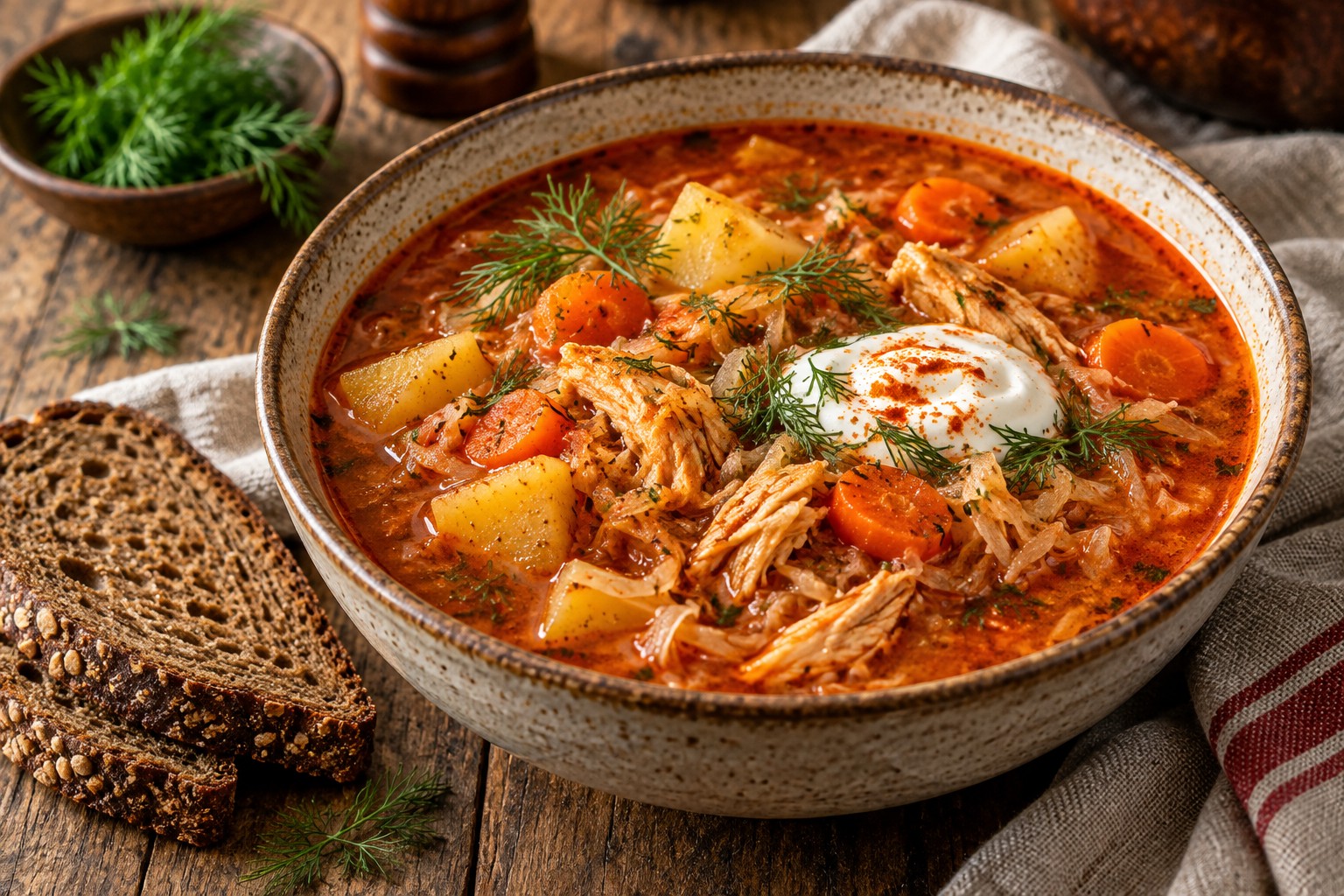
Why you’ll like this one
Sauerkraut rarely gets invited into the soup pot often enough.
That’s unfortunate, because it does several jobs at once. It brings acidity, texture and a deep cabbage flavour that would normally take considerably longer to develop. Paired with sweet paprika, caraway and chicken, it creates a broth that’s warming without being heavy.
Potatoes make the soup substantial, but we’re using just enough to give the bowl some heft rather than turning it into potato soup. Carrots and onions contribute sweetness, which is important against the sauerkraut’s tang.
And then there’s the paprika. Rather than simply shaking it into simmering broth, we’ll briefly bloom it in the onion mixture. That releases its flavour into the cooking fat before the stock goes in.
The result lands somewhere between a rustic Central European cabbage soup and a lighter chicken paprikash. On a cold October evening, that’s very good territory.
Ingredients — 6 servings
- 1¼ lb / 570 g boneless, skinless chicken thighs
- 1 tbsp olive or avocado oil
- 1 large yellow onion, diced
- 2 medium carrots, diced
- 2 celery stalks, diced
- 3 garlic cloves, minced
- 2 tbsp sweet Hungarian-style paprika
- ½ tsp smoked paprika
- ½ tsp caraway seeds, lightly crushed
- ¼ tsp crushed red pepper flakes, optional
- 6 cups low-sodium chicken stock
- 1 lb / 450 g yellow or red potatoes, cut into ¾-inch cubes
- 2 cups sauerkraut, lightly drained but not rinsed
- 1 bay leaf
- ½ tsp freshly ground black pepper
- ¼ tsp kosher salt initially, plus more as needed
- 1 tsp Dijon mustard
- ¼ cup chopped fresh dill
- ¼ cup chopped fresh parsley
- ½ cup plain Greek yogurt or sour cream, optional for serving
Ingredients — 12 servings
Use an 8-quart or larger heavy-bottomed stockpot.
- 2½ lb / 1.14 kg boneless, skinless chicken thighs
- 2 tbsp olive or avocado oil
- 2 large yellow onions, diced
- 4 medium carrots, diced
- 4 celery stalks, diced
- 6 garlic cloves, minced
- ¼ cup sweet Hungarian-style paprika
- 1 tsp smoked paprika
- 1 tsp caraway seeds, lightly crushed
- ½ tsp crushed red pepper flakes, optional
- 12 cups low-sodium chicken stock
- 2 lb / 900 g yellow or red potatoes, cut into ¾-inch cubes
- 4 cups sauerkraut, lightly drained but not rinsed
- 2 bay leaves
- 1 tsp freshly ground black pepper
- ½ tsp kosher salt initially, plus more after tasting
- 2 tsp Dijon mustard
- ½ cup chopped fresh dill
- ½ cup chopped fresh parsley
- 1 cup plain Greek yogurt or sour cream, optional for serving
Method — eight simple stages
- Brown the chicken. Pat the thighs dry and season lightly with black pepper and a little of the salt. Heat oil in a large heavy-bottomed soup pot over medium-high heat. Add chicken in a single layer, working in batches if needed. Cook 3–4 minutes per side until deep golden-brown patches develop. Transfer to a plate; it does not need to be cooked through yet.
- Soften the vegetables. Reduce heat to medium. Add onion, carrots and celery. Cook 6–8 minutes, stirring occasionally, until the onion is soft and the vegetables pick up the browned bits. Add garlic and caraway; cook for 30 seconds.
- Bloom the paprika. Reduce heat to medium-low. Add sweet paprika, smoked paprika and optional red pepper flakes. Stir constantly for just 20–30 seconds. Immediately pour in about 1 cup of stock and scrape the bottom thoroughly with a wooden spoon.
- Start the simmer. Add remaining stock, potatoes and bay leaf. Return chicken and its juices to the pot. Bring to a gentle boil, reduce heat, partially cover and simmer for about 15 minutes.
- Add the sauerkraut. Remove chicken to a cutting board. Stir sauerkraut into the soup and simmer another 10–12 minutes, until potatoes are completely tender. Meanwhile, chop or shred the chicken into bite-sized pieces.
- Finish cooking. Return chicken to the pot and stir in Dijon. Simmer 2–3 minutes more, until chicken reaches 165°F / 74°C and everything is steaming hot. Remove and discard the bay leaf (both leaves for the double batch).
- Taste the broth. Taste before adding more salt: sauerkraut contributes plenty on its own. If too sharply acidic for your preference, add ¼–½ cup extra stock rather than sugar.
- Add herbs and serve. Remove from heat and stir in most of the dill and parsley. Ladle into bowls and top with the remaining herbs and, if desired, a spoonful of Greek yogurt or sour cream.
Stay at the stove when blooming paprika. It becomes fragrant in warm fat, but scorched paprika turns bitter. Give it only 20–30 seconds, then get the stock in.
The flavour finish
There isn’t any lemon or vinegar hiding at the end of this recipe. The sauerkraut is already bringing the acidity. That’s what makes the finishing strategy here a little different.
Fresh dill supplies brightness without making the broth more sour, while Dijon adds just enough mustardy sharpness to connect the chicken, potatoes and cabbage.
The optional spoonful of Greek yogurt or sour cream provides contrast in the opposite direction. It softens the sauerkraut’s acidity and makes the paprika taste rounder and richer.
Add dairy to individual bowls. A cool spoonful gives better contrast and keeps the remaining soup more freezer-friendly.
Optional variations
The additions below are for 6 servings; double them for 12.
- Pork version: Replace chicken with boneless pork shoulder cut into small cubes. Simmer pork for approximately 30 minutes before adding potatoes; continue until the pork is tender.
- Smoked turkey version: Use 3 cups chopped cooked smoked turkey. Skip browning and add turkey during the final 10 minutes.
- Bean version: Reduce chicken by half and add one drained and rinsed 540 mL / 19 oz can of white beans with the sauerkraut.
- Extra vegetables: Add 2 cups sliced mushrooms with onion and carrots. Let them brown before adding garlic.
- The soup is dairy-free without the optional yogurt or sour cream. It is gluten-free when made with certified gluten-free stock, mustard and packaged ingredients where necessary.
Freezer notes
Chicken and sauerkraut freeze beautifully. Potatoes require a little consideration: waxy yellow or red potatoes hold their texture better than floury baking potatoes, which can become grainy.
- Cool promptly. Divide the soup into smaller containers rather than leaving the whole stockpot to cool.
- Use approximately 3-cup containers for convenient two-person portions. Leave about ½ inch of headspace in rigid freezer containers.
- Freeze for up to 3 months for best quality. Keep Greek yogurt and sour cream out of the freezer portions.
- Thaw overnight in the refrigerator whenever possible.
- Reheat gently in a saucepan over medium heat until chicken reaches 165°F / 74°C and soup is steaming throughout.
- If the broth has become concentrated, add a splash of chicken stock. Finish with fresh dill and a spoonful of yogurt or sour cream.
🏅 Freezer rating: Very Good. The sauerkraut flavour often becomes more integrated after a day’s rest, making tomorrow’s lunch particularly good.
Batch-cooking tip
If you’re making the 12-serving batch primarily for the freezer, freeze the soup base without potatoes. Prepare the chicken, vegetables, paprika broth and sauerkraut as directed, but omit potatoes from the portion you’re freezing.
When reheating a 3-cup container, add one small freshly diced potato and enough extra stock to cover it comfortably. Simmer approximately 12–15 minutes until tender.
It takes a little longer on reheating day, but you’ll get freshly cooked potatoes every time while still having most of dinner already finished.
Sauerkraut itself is extremely convenient for batch cooking because there’s almost no prep involved. Open, drain lightly and into the pot it goes. Some ingredients understand Tuesdays better than others.
What to serve with it
- Dark rye bread with a little butter
- Cucumber and dill salad
- Roasted beets with horseradish
- Simple apple and cabbage slaw
- Warm whole-grain bread with Dijon
Nutrition snapshot
Estimated per serving, without yogurt or sour cream. These figures are supplied estimates and vary with the chicken, potatoes, sauerkraut, stock and exact ingredients used.
| Nutrient | Estimate |
|---|---|
| Calories | ~330 |
| Protein | ~29 g |
| Carbohydrates | ~31 g |
| Fibre | ~6 g |
| Fat | ~11 g |
For less sodium, compare sauerkraut labels, use unsalted stock and wait until the finished soup has simmered with the sauerkraut before adding salt. Briefly rinsing some sauerkraut also reduces its characteristic flavour.
Cook’s note
Paprika is one of those spices that rewards a little technique. Briefly stirring it into the cooking fat and vegetables before adding stock produces a richer flavour than simply shaking it into broth.
But paprika scorches easily. Give it twenty or thirty fragrant seconds in the pot, then get the stock in. That’s the tiny kitchen manoeuvre that gives this soup its deep red colour and warm, rounded character.