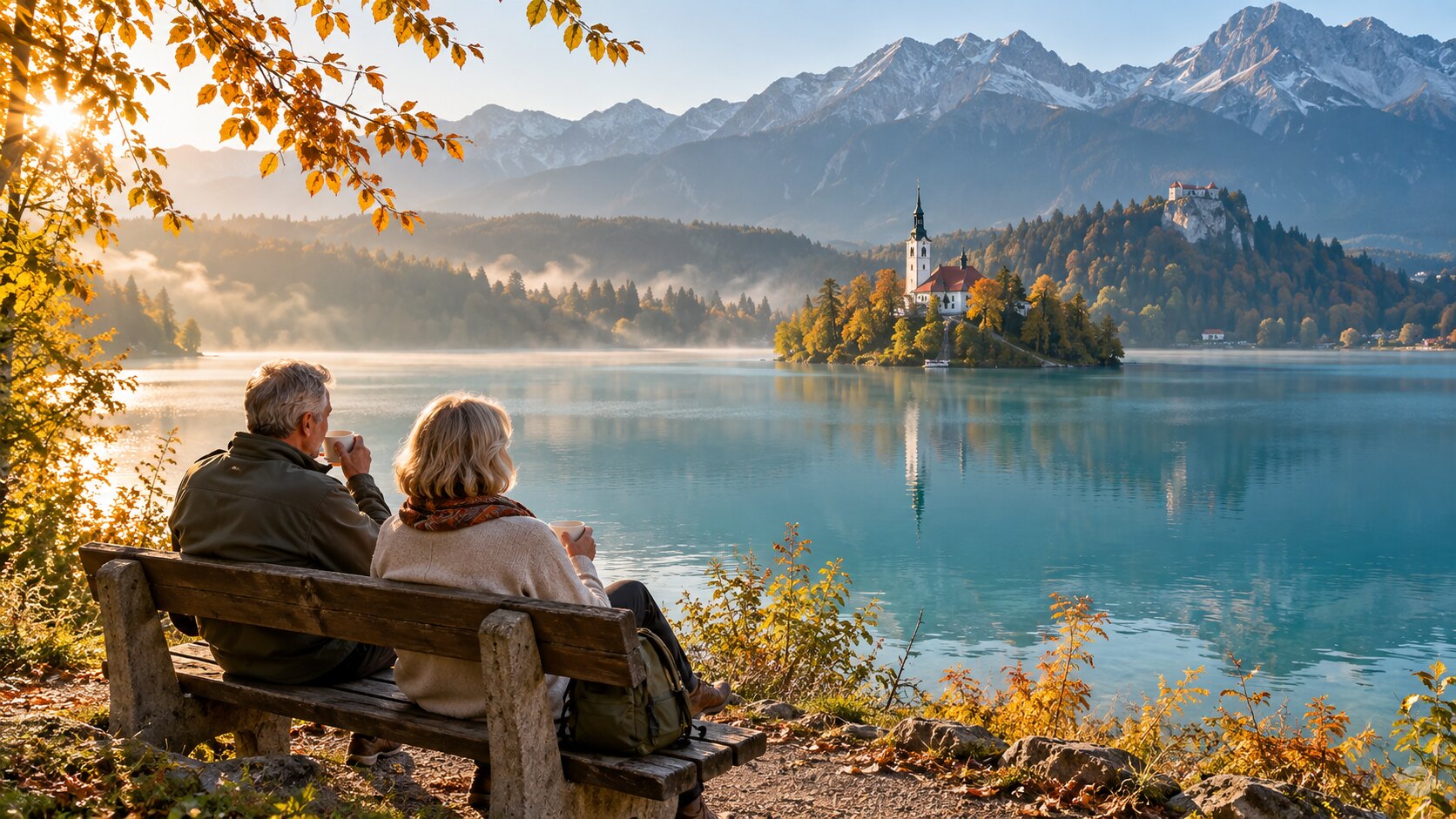
Morning arrives softly at Lake Bled. Mist lifts from turquoise water, the Julian Alps sharpen into view and a wooden boat slips quietly toward the island church. From a lakeside bench, coffee warming your hands, you realize there is nowhere you need to be before lunch.
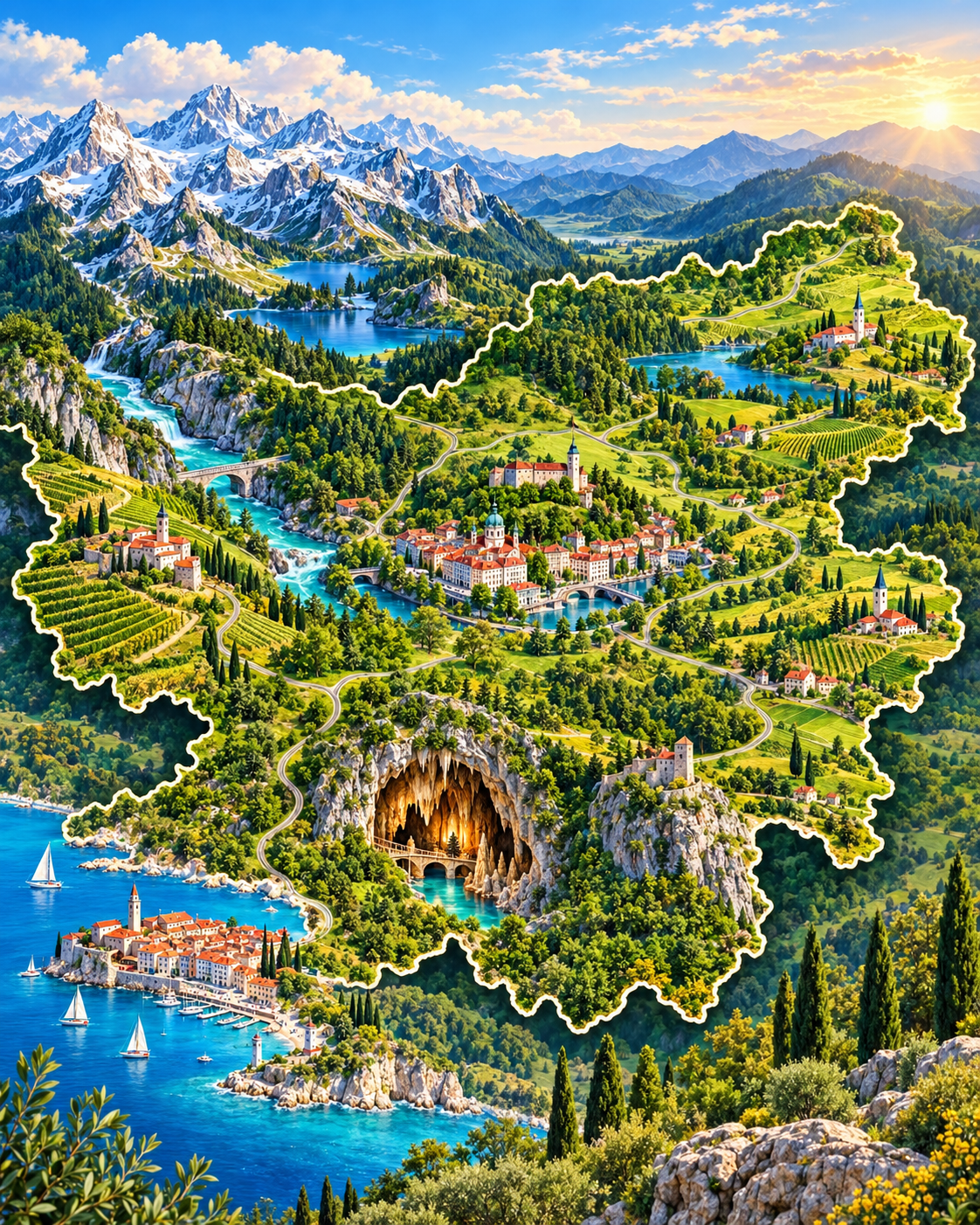
This is Slovenia at its best: compact enough to explore without exhausting travel days, yet varied enough to move from alpine lakes to vineyards, caves, old towns and the Adriatic coast in a single journey.
For travellers in their 50s, 60s and beyond, it offers a rare balance—adventure without constant strain, beauty without needing to conquer it and culture that becomes richer when you stop rushing.
Slovenia does not ask how much you can fit into a day. It asks how fully you can inhabit it.
Why Slovenia belongs on the slow-travel list
Slovenia sits where the Alps, Mediterranean, Karst and Pannonian plain meet. More than half the country is forested, and the landscape changes remarkably quickly: Lake Bohinj in the morning, the emerald Soča River in the afternoon and a glass of Rebula among western vineyards the next day.
Its small scale is an advantage, but it can also tempt visitors into overplanning. Resist. Choose two or three bases and make short, thoughtful outings instead of treating the country like a collection of day-trip targets.
Couples find easy romance in lake walks and long dinners. Solo travellers gain a manageable, generally welcoming destination. Active retirees can choose anything from level riverside paths to serious alpine routes—without pretending every beautiful view must be earned the hard way.
When to go
Slovenia’s geography creates local weather differences. The coast may be mild while the Alps are wet or cold. Check the official forecast for the exact valley or pass, and never let a sunny Ljubljana morning decide an alpine afternoon.
- Late May through June: Long days, green valleys and generally comfortable conditions for walking. Mountain weather can still turn quickly, and higher routes may retain snow.
- September to early October: Often the sweetest slow-travel window—harvest season in wine country, cooler evenings and fewer peak-summer visitors.
- July and August: Best for swimming and high-mountain access, but Bled, Bohinj, Ljubljana and Piran can be busy. Reserve early and visit headline places in the morning.
- April and later October: Quieter and potentially excellent value, with less predictable rain, cool nights and reduced seasonal services.
- Winter: Beautiful for festive cities, spas and snow trips, but not a simple substitute for a summer road trip. Driving, footwear and mountain plans need winter preparation.
Pack layers and a light waterproof shell—even when the forecast looks confident.
A ten-day route that still feels like a holiday
With only seven days, use Ljubljana and one alpine base. With two weeks, add the Karst, a spa town or extra nights in the place you most wanted to postpone leaving.
- Days 1–3 — Ljubljana: Settle into the pedestrian centre, browse the Central Market, follow the river and choose one easy day trip rather than three.
- Days 4–6 — Bohinj or Bled: Use quieter Bohinj for nature and Bled for convenience. Walk, take a boat and give one day entirely to weather and energy.
- Days 7–8 — Soča Valley or Goriška Brda: Choose river scenery and First World War history around Kobarid, or vineyard roads and farmhouse meals in Brda.
- Days 9–10 — Piran and the coast: End with Venetian lanes, sea air and a final dinner that requires no driving afterward.
What a comfortable trip costs
A couple planning two unhurried weeks might begin with an on-the-ground budget of roughly C$4,500–C$8,000, then price the actual dates. Summer lake stays, premium cars and memorable restaurants can push it higher.
- Daily budget for two: roughly C$300–C$550 before international flights, with room for comfortable lodging, good meals, local transport and some paid experiences.
- Accommodation for two: approximately C$140–C$300 a night for many well-reviewed guesthouses, apartments and small hotels; sought-after lake views and boutique stays can cost more.
- Food: allow about C$15–C$30 per person for a casual lunch and C$35–C$75 for a relaxed dinner with drinks. Fine dining and destination restaurants sit well above that range.
- Rental car: often C$60–C$110 a day before fuel, parking and optional coverage. Confirm whether the Slovenian motorway e-vignette is included.
- Experiences: lake boats, caves, cable cars, tastings and guides vary widely. Walking an old town, swimming at a legal access point or lingering at a viewpoint may cost nothing.
Could Slovenia become a seasonal home?
For a one- to three-month trial stay, Slovenia can be very appealing: good infrastructure, a strong café culture, excellent access to nature and easy connections to neighbouring countries. Ljubljana offers the broadest services; smaller towns offer calm but fewer year-round rentals and less English outside visitor settings.
Canadian citizens can generally visit the Schengen area without a visa for up to 90 days in any 180-day period. That limit applies across the entire Schengen area—not 90 days in each country.
Slovenia does not offer a simple, dedicated retirement visa comparable to some better-known retirement destinations. Staying longer requires a qualifying legal basis and a residence process. Digital-nomad or other temporary permits may fit some people, but pension income or property ownership alone should never be assumed to create residency rights.
Before treating Slovenia as a retirement base, confirm the current rules with Slovenian authorities and obtain cross-border advice about Canadian tax residency, provincial health coverage, insurance and estate planning.
The wisest retirement test is not a rushed summer holiday. Try a furnished stay in shoulder season and live an ordinary Tuesday.
Food that tastes like the landscape
Slovenian cooking draws from Alpine, Mediterranean, Central European and Balkan traditions. It is at its most memorable in a family-run gostilna, where the menu follows the season and lunch is allowed to take its time.
At Lake Bled, share a kremna rezina—crisp pastry, vanilla custard and whipped cream—preferably after walking the lake rather than before. Try Kranjska klobasa with mustard or sauerkraut, rolled štruklji with savoury or sweet fillings and Prekmurska gibanica layered with poppy seed, walnut, apple and cottage cheese.
Western Slovenia adds extraordinary wine country. Rebula is a bright signature of Brda; Teran belongs to the Karst’s red soil. Book a tasting with a driver, taxi or walking-distance stay so the pleasure never competes with the road.
The best Slovenian meal may not be the fanciest—it may be the one where the owner explains what came from the garden that morning.
The places worth lingering in
- Lake Bled: Walk the roughly six-kilometre lakeside loop in sections, row or take a traditional pletna boat and save the castle climb for a day when your knees vote yes.
- Lake Bohinj: Quieter and wilder than Bled, with lakeside paths, boat rides and access to Triglav National Park. It is a place to repeat a morning, not merely photograph it.
- Ljubljana: Compact, sociable and largely pedestrian in the centre. Browse the market, ride the funicular if the castle walk does not appeal and let the river cafés provide the itinerary.
- Soča Valley: Follow the river around Kobarid, Tolmin or Bovec. Choose short riverside walks, a museum visit or a properly guided paddle suited to your ability.
- Goriška Brda: Vineyards, hill villages and long lunches reward a car-and-driver day or a countryside stay.
- Piran: Venetian architecture, narrow lanes and sunset light on the Adriatic. Stay overnight to experience the town after day visitors leave.
- The Karst: Add Škocjan or Postojna’s caves, local prosciutto and stone villages—but check the amount of walking, stairs and cool underground temperatures first.
Five moments worth building a trip around
- Take the first quiet walk beside Lake Bled before tour buses and day-trippers arrive.
- Ride a cable car or chairlift for an alpine view, then choose a realistic trail rather than the route that sounds most impressive.
- Sit beside the Soča River long enough to watch its colour change with the light.
- Share a private or small-group tasting in Brda and hear how one family understands its land.
- End a day in Piran with seafood, local wine and nowhere else to drive.
A once-in-a-lifetime experience does not have to be difficult. It has to be fully noticed.
Comfort, driving and mountain sense
- A car gives rural freedom, but trains and buses work well for many major connections. In summer, use public transport where parking pressure would drain the fun from the day.
- Slovenian motorways require an e-vignette. Ask the rental company to confirm coverage in writing and use only the official DARS sales channel if you must buy one.
- Vršič Pass is spectacular, steep and full of hairpin turns. It is not an essential test of courage. A driver, organized excursion or different route may create a better day.
- Mountain weather changes quickly. Check conditions, use marked routes, carry layers and tell someone your plan. A lakeside walk and an alpine hike are not interchangeable.
- Cobblestones, castle climbs, caves and historic lodging can create accessibility challenges. Ask exact questions about lifts, steps, showers and parking before booking.
- Travel medical insurance remains important. Public healthcare is not automatically free for visitors, and mountain rescue or evacuation may need specific coverage.
- Ticks occur in forest and grass areas. Use repellent, check skin after walks and discuss destination-specific health advice with a travel clinic.
The honest balance
What Slovenia does beautifully: extraordinary variety over short distances, attractive small cities, clean and well-kept public spaces, deep access to nature, memorable food and wine, and a scale that supports slower travel.
What can surprise: Bled and Piran are not hidden secrets in summer; alpine weather can cancel the day you imagined; rural public transport may limit spontaneity; and the most photogenic rooms are not automatically the most accessible.
It may not suit travellers seeking a sprawling resort scene, guaranteed beach weather or effortless luxury at bargain prices. It excels for people who enjoy beautiful days with a little texture—market mornings, changing weather, family inns and the freedom to choose a smaller road.
The B Side verdict
Slovenia is ideal for travellers who want beauty without chaos and activity without turning every day into a test. It can rekindle romance, make a solo traveller feel pleasantly self-directed and give an active retiree enough possibilities for several very different trips.
Go in late spring or early autumn. Choose fewer bases. Leave one day unscheduled. Let the lake, river or vineyard become familiar enough that you begin to recognize the light.
Your future self will not remember how efficiently you completed Slovenia. It will remember the morning you stopped checking the time.
What is calling first—the lake, the river or the vineyard? Choose one, stay longer and let the rest wait.