Most homes contain a few things apparently waiting for a sufficiently important occasion: the beautiful glasses nobody drinks from, the expensive tea tucked behind the ordinary tea, the sweater that is “too nice” for everyday wear, the restaurant you have been meaning to try and the bottle of perfume or cologne used so sparingly that it may qualify for inheritance.
We save experiences too. We will invite people over when the house is finished, take the scenic drive when the weather is perfect, learn the skill when we have more time and visit that place when life settles down.
Then, somewhat inconveniently, life keeps moving. Retirement offers an opportunity to question the habit of postponement—not by spending recklessly or filling every day with treats, but by recognizing something simple.
An ordinary Tuesday is still part of your life. It deserves some of the good stuff too.
We spend years practising “later”
Working life encourages postponement: after this busy period, after the mortgage is smaller, after the children are older, after Christmas, after winter, after retirement.
Postponing things can be sensible. Adults have responsibilities, budgets and limited time. But “later” can quietly become automatic. Even when circumstances change, the habit remains.
Retirement may give us more control over our days, yet we can continue behaving as though enjoyable things require permission from some future version of ourselves. They often do not.
The good plates in the cupboard
When her mother died, Elaine inherited a beautiful set of dishes. They had appeared at Christmas dinners and important family gatherings for decades, so she carefully packed them away.
Years later, while looking for something else, she opened the cupboard and saw them. She realized the dishes had originally been treasured because people used them together. That evening she took out two plates. Dinner was simply soup, bread and salad—but she served it on the good dishes.
She began using them regularly. Eventually one plate chipped. Elaine was disappointed for approximately thirty seconds, then realized something lovely: the chip existed because the plate had returned to someone’s life. It was no longer being preserved. It was participating.
Enjoyment does not need an audience
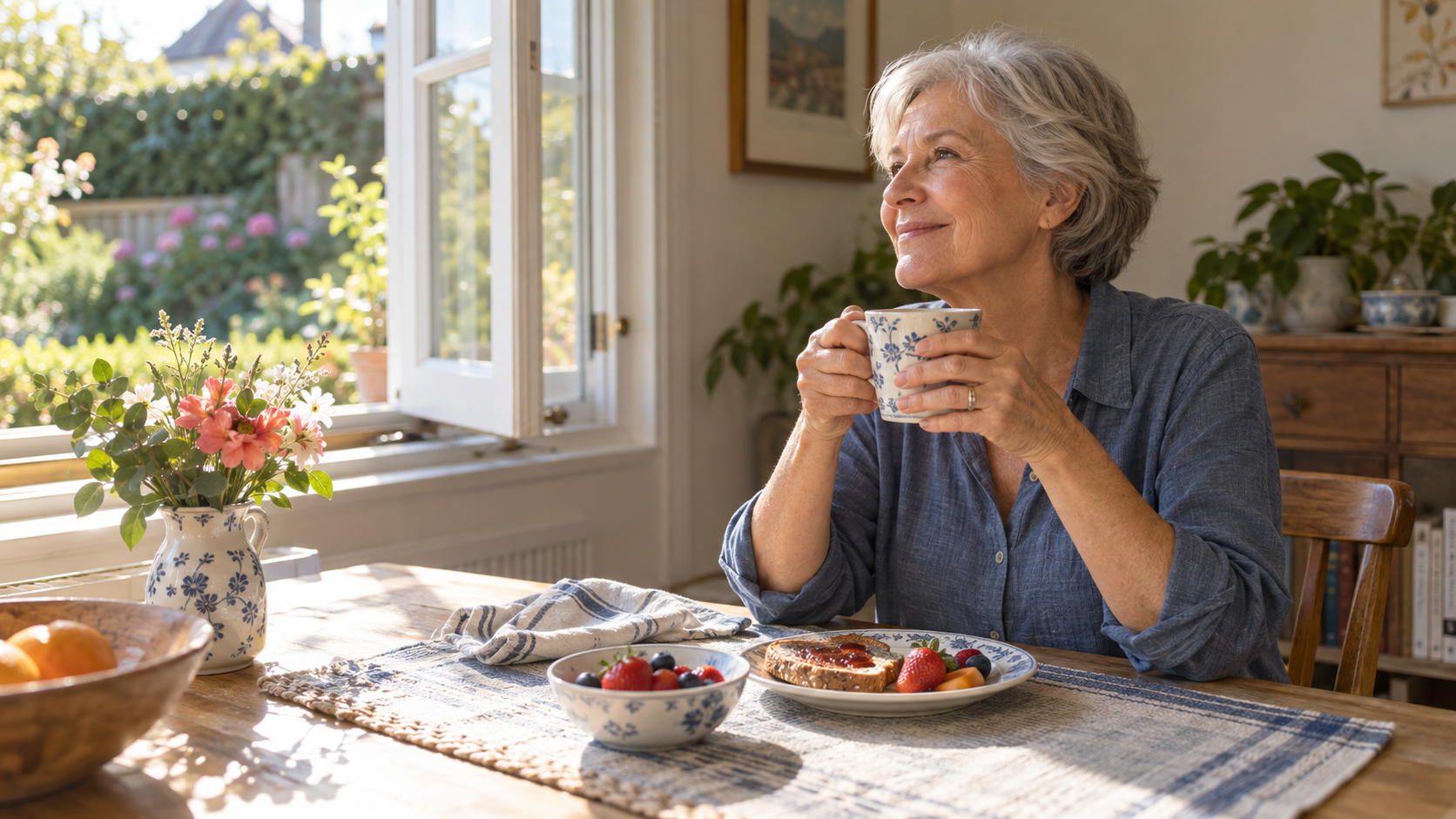
Pleasure does not require witnesses. Make a beautiful breakfast for yourself. Put flowers on the table when nobody is visiting. Wear the shirt you love to the grocery store. Take the scenic route home. Order dessert without involving someone’s birthday.
These are not extravagant acts. They are small reminders that everyday life deserves attention.
The good things in your life do not need an audience—or an occasion—to be enjoyed.
Stop waiting for perfect conditions
We will visit that town when we have a full weekend. Start walking when the weather improves. Invite everyone over when the house is tidier. Try kayaking when we are fitter. Begin painting when there is a proper workspace.
Perfect conditions are notoriously unreliable. A more useful question is: What is the smaller version I could do now?
- Cannot take a week-long trip? Take a day trip.
- Cannot renovate the room? Improve one corner.
- Cannot host twelve people? Invite two.
- Cannot commit to a ten-week course? Attend one workshop.
- Cannot walk five kilometres? Walk whatever distance works comfortably today.
Smaller does not mean inferior. Sometimes smaller is what finally happens.
Use things while they still delight you
Look around and notice what you are protecting from use: good towels, candles, cookware, clothes, books, tools, sporting equipment or the comfortable chair in the “good room.”
Objects usually enter our lives because we expect them to improve those lives somehow. Yet we can become better at protecting them than enjoying them. Sentimental and valuable objects may deserve care, of course—but many things do not need preservation. They need Tuesday.
Make the ordinary five percent better
Enjoying life does not require constant novelty. Sometimes it means improving an ordinary moment by five percent: coffee from the mug you actually like, music while cooking, lunch outside, the interesting loaf instead of the usual one, or taking your book somewhere beautiful.
Tiny changes are useful precisely because they require no planning committee, reservation or luggage. They make everyday life a little more pleasant while it is happening.
Be generous with experiences—and words
There is another kind of good stuff we save: “I appreciate you.” “I was thinking about you.” “That meant a lot to me.” “I’m glad we’re friends.” “Come over for coffee.”
These words cost nothing, yet they are remarkably easy to postpone. You do not need a birthday, anniversary or difficult moment to tell people they matter. Some things become more valuable when we stop saving them.
Your 15-minute someday-to-soon challenge
You do not need to organize the entire future. Just move one thing from someday to soon.
- Set a timer for 15 minutes and walk through your home.
- Find one thing you have been saving unnecessarily—a candle, shirt, notebook, bottle of wine, kitchen gadget, beautiful dish, fancy soap or comfortable blanket.
- Use it today, or place it somewhere you will actually use it this week.
- If no object comes to mind, choose an experience you have postponed.
- Make the reservation, send the invitation, check the opening hours or put a date on the calendar.
Today counts too
There is wisdom in saving. Money can create security, resources should not be wasted and meaningful objects can preserve memories. But life itself is not something we can store for later.
The years ahead contain possibilities, but today is the only day currently available for use. That does not mean every day must be special. Ordinary does not have to mean neglected.
Rest on the good sheets. Drink from the beautiful cup. Wear the jacket. Call the person. Book the lunch. Light the candle. Take the drive. Enjoy what you worked hard enough to bring into your life.
What have you been saving for someday that you might enjoy much more if you simply started using it now?
The good stuff does not always need a special occasion. Sometimes using it is what creates one.